Come to the Father !

How should we approach our Creator? Clearly, this is the most important question we could ask. Jesus says we must come to God as our Father. And, of course, Jesus is showing that he is the way to the Father.

We’ve seen how important this is to Jesus. He lays down his life to sanctify us—so we can legitimately come to the Father as his children.[i]

And now, the apostles teach us who trust in Christ, how we should live before our Father. They commonly address us fellow Christians as ‘brothers and sisters.’[ii]  We belong to the Father, and so, to one another.

The apostles have been disciples of Jesus. They’ve learned from him. But this identity as disciples seems to get caught up in the new status given to believers—as children.[iii] We still learn from Christ—eagerly—but do so as those who are in him[iv], and so, in the family of the Father. This is where God wants us to spend our present life, and future.

James Packer, in his widely read book ‘Knowing God’ writes,

’If you want to judge how well a person understands Christianity, find out how much he makes of the thought of being God’s child, and having God as his Father. If this is not the thought that prompts and controls his worship and prayers and his whole outlook on life, it means that he does not understand Christianity very well at all. … “Father” is the Christian name for God.[v]

Here are several wonderful truths about the Father that the apostles make clear in their letters. I hope it’s not too simplistic to choose several words starting with the same letter, but it may help us remember who God our Father is.

The Father is the fountainhead and finale of our life in Christ. He’s the focus for our prayer and worship. And he’s the framework of the new creation to which we now belong.

First, our Father God is the fountainhead and finale of our life.

Paul warns the Corinthians, and all of us, about the subtle influence idols can have.  Many things in this world are attractive, and seem easier to get than a relationship with God. Because of this, we need, not just to know about God but to know him—that is, to have a relationship with him.

So, Paul says, for us, there is one God—the Father. Everything comes from him, and is for him. And everything he does happens through Jesus Christ.[vi]  

The Father and our Lord Jesus are one God. But there are different ways in which they are God to us. The Father is the fountainhead of all things—in creating the world and in saving us. And the Son is the one by whom the Father’s purpose and grace comes to us.

Jesus never wants to be ‘all of God’ to us. He comes from the Father, and her takes us to his Father.

This pattern of from the Father and through Christ is repeated in the way the apostles begin their letters to churches.

Paul asks that grace and peace, or mercy or comfort, will come to his fellow believers from the Father—and through Jesus Christ.[vii]

Peter says we are chosen for salvation, by the Father, to be sprinkled with Christ’s blood. By the Father’s mercy, we are born again with a living hope through Christ’s resurrection.[viii]

And John says the Father’s eternal life is revealed to us through Christ’s coming.[ix]

Without the blessings that come to us through Christ, we would not want to know God as Father, let alone be reconciled to him. We would see him as austere and unreachable. But Jesus washes us clean, dignifies us with his righteousness and floods us with his love. Through him, we want to know the Father who sent him to be our Saviour.

Paul is awed by all this, and worships. ‘I bow my knees before the Father.’ He wants the riches of the Father’s glory to strengthen us—by the Spirit and by Christ dwelling in our hearts.[x]

There’s something more Paul tells the Corinthians, and us. He says everything is for the Father.

Jesus models what this means for us. He’s lived his life on earth for the Father.[xi] But at the end of history, he will present the kingdom—all he has labored for—to his Father. He wants us to see the Father being everything to everyone.[xii]

This is the great objective of Christ—to have us before his Father, sharing in the relationship he enjoys and bringing glory to the Father.[xiii]

This is a truth we need deeply. We are created for relating, for serving, and to be appreciated. If we don’t come to know the Father and live for him, we are in danger of other things in this world becoming ‘father’ to us. We start to drift. We’re coming from no-where and going no-where. We prostitute our personhood on people and things that cannot be god to us. We become warped and deeply unsatisfied.

Jesus has died and risen to restore this relationship and to make us whole. If we now live our life in Jesus our Lord, from the Father and for the Father, our whole life is brought into balance. Other relationships take their place around this but don’t have to bear the weight of ultimate significance.

It’s an enormous relief to know that, through Jesus, we have come home to the Father.

Second, the Father is the focus of our attention.

For us, calling God ‘Father’ is not just remembering the right name. It’s a cry of recognition. In the same way that a young child’s first words may be ‘mummy’ or ‘daddy’, we cry ‘Abba, Father’. Like an infant, we are recognising the God who has given us new life, and whose provisions and words are our sole means of staying alive. The Father has our full attention![xiv]

Paul talks about this cry of recognition in two of his letters.[xv]

The Holy Spirit has come to us, and he cries out within us, ‘Abba Father’. We are speaking to God in the way Jesus did.[xvi] The Spirit is witnessing to our spirits that we are children of God.

The Holy Spirit is God—together with the Father and Son. He’s enabled Jesus to live among us and fulfill his ministry. He’s enabled Jesus to pray to the Father. Now he’s come to us to enable us to call on God as our Father. His special ministry is fellowship.[xvii] We are being included in the divine companionship!

This is not something to try and make happen. It’s a gift. And entirely necessary.

For example, the Galatians are in danger of relating to God legally—not truly. While they were still worshipping idols, they’d been slaves to their passions and to the demands of the world. And now they’re in danger of reducing their new life in Christ to a list of demands.

They’re thinking of God as an owner of slaves, not a Father of children. If they don’t know God as their Father, their behaviour will become wooden and false.

The world, and our own human nature, makes slaves of us—as we try to satisfy cravings on the one hand and demands on the other. We’re never really doing what we want to do, even while we’re claiming to be free.

But the cry of ‘Father’, coming from our hearts, and coming from above, is persuasive evidence to us that God is not harsh or demanding. We’re legitimate and permanent members of his family. Our names are known, our needs are important. We have a place in his enterprise and an inheritance to come.

We’ve not just been justified. We’ve come home!

Then, in his letter to the Romans, Paul says we must stand nobly and say ‘No’ to our fallen nature. And to do this, we need to know we are God’s children. We’re not slaves of our broken humanity. The Holy Spirit, poured into our hearts, is conveying to us all the love of the Father and all the victory of his Son.[xviii] And we need this certainty to keep us confident of receiving our family inheritance.

Again, in his Ephesian letter, Paul surveys the broad sweep of God bringing people of all nations to himself.[xix] He calls this God’s wisdom, realized through the unsearchable riches of Christ. And, for this reason, he bows his knees to the Father.[xx] He is the fountain-head of all that we need for life and godliness.

So, he asks the Father to further reveal this wonderful Christ to his church—so they will be filled with all the fulness of God! He, the Father, before whom Paul kneels, has more to share with us than we could ask or think of!

Our life as God’s children is like that of the prodigal son in Jesus’ story. We’ve been received home. We have a place of honour, and a future. Perhaps we could imagine this son, home again, on the day after the party his father arranges. He’d be up early, looking around for things to do! Does this describe our relationship to the Father? I hope it does!

I’ll take up a third aspect of how the apostles understand God being Father to us in another article. He gives to us the framework for our families, and churches, and for the future of our world.


[i] Heb. 2:11 with John 17:21

[ii] The apostles speak of believers most frequently as ‘in Christ’, or similar phrase. The second most frequent is ‘brothers and sisters’. The third most frequent is ‘saints’.

[iii] A disciple is an undistracted learner. That’s what the apostles were. It’s the way converts are spoken of in the missional book of Acts. But in the letters that speak to the inner life of the church, not at all.

[iv] Eph. 4:22.

[v] In ‘Knowing God’, p. 224. The whole chapter on adoption as God’s children is wonderful to read.

[vi] 1 Cor 8:6. This verse is an adaption of Israel ‘Shema’ or confession of faith, suggesting that God is now our covenant Father.

[vii] Paul’s opening greetings; and Eph. 5:20; Phil. 4:20; Col. 1:12

[viii] 1 Pet. 1:1-3

[ix] 1 John 1:1-3

[x] Eph. 3:14-16

[xi] John 17:4

[xii] 1 Cor. 15:27-28

[xiii] Rom. 15:6; Eph. 5:20; Phil. 4:20; Col. 1:12; 3:17; 1 Thes. 3:13; 2 Thes. 2:16; Rev. 1:6

[xiv] Because Christ is our Saviour, and our life, we do well to have him as the focus or our lives too. But it’s important to know God in all the ways he’s revealed himself to us. We need to let our affections widen, and receive all the ways God is being God to us.

[xv] Gal. 4:4-9; Rom. 8:12-17

[xvi] Mark 14:35-36

[xvii] 2 Cor. 13:14

[xviii] Rom. 8:9; the Spirit is the Spirit of God and of the Son.

[xix] Eph. 3:8-11

[xx] Eph. 3:14-21


Life overflowing—John 4 & 7

We’re finding out what the Apostle John tells us about the Holy Spirit in his Gospel.

And here, in two episodes, Jesus shows us that real life and worship flow from receiving God’s gift of the Holy Spirit—an eternal life. The alternative is a life hijacked by things we can see and control.

The first account happens in Samaria[i]. The second at the temple in Jerusalem[ii]. It helps if we look at them together.

In the first episode, Jesus meets a woman by a well and asks for a drink, but, as the story reveals, he knows she is thirstier than he is. And he wastes no time in directing her attention to a new way to live.

She is surprised that Jesus speaks to a Samaritan woman. Jesus says if she knew who he was, she would ask him for living water. But there’s a way to go before she will understand this.

A life lived horizontally, with no access to God, is no real life at all. This woman needs to be saved by a drink from God’s ‘well of salvation’[iii]. She needs God himself to come to her, like running water, bubbling up within her as life that will be forever.

On the second of the two occasions we are looking at, Jesus is in the temple for a Feast day and offers ‘living water’ to everyone there. So, we know this offer is being made to us all. And John identifies this water as the Holy Spirit.

What difference does it make to us, to receive this gift of the Spirit? We know that no human being can live another person’s life for them. If we attempt to take responsibility for something they should do, we do them damage.

But life is God’s to give, and Jesus is the giver, and the gift is the Spirit. Only the Spirit can work things in us that we should do and must do. And he never intrudes on the responsibility given to us.

The woman of Samaria has no idea of a world above her that intersects with her daily life. When Jesus offers her God’s gift of living water, she merely asks if Jesus is greater than Jacob who is thought to have dug this well.

So, Jesus makes his offer of water more explicit—not a temporary quenching of thirst but an ongoing supply within her as life that is eternal.

The woman still thinks of physical things. But Jesus asks to see her husband—all the time knowing her difficult history.

And then, Jesus fills in her partial story—about her five previous husbands and now a partner. She can see that Jesus is a prophet! But still, she prefers to think horizontally. Or perhaps, to divert attention from an awkward truth! She asks about the proper location for worship—Samaria or Jerusalem.

Jesus tells her what God has revealed to Israel.  And he adds, that a new era is beginning. People are going to worship in spirit and truth. They will really worship from their hearts! This will never be the case without the help of the Spirit[iv].

It’s so easy to reduce everything—including God—to things we can understand and control. But they don’t bring us to God. And oftentimes, they don’t even work—like the marriages this woman has had.

This has always been our problem. Like people in Jeremiah’s day, we turn away from God who is the fountain of living water for us, and we dig tanks that leak[v]. In other words, we prefer idols we can make and control, rather than turn to and trust in the living God.

Our need is so deep! We are made in God’s image. We need to hear him speak. We need his blessing. We need to call God ‘Father’! If we don’t know him, and if we’re not full of him, we remain discontented and must create something else to be wonderful or great or powerful.

So, Jesus must baptize us in the Spirit. Only this will free us from the bitterness and disappointment and shame of the past. Only this will open us up to God who loves us, and to people who need us[vi].

Something has happened to this Samaritan woman. She returns to her community. She talks. People listen. What amazes her is that Jesus has known her whole sorry story and still offered her a life from heaven.

She’s come to the well in mid-day heat—perhaps to avoid contact with other women. Now, she has a message, an eagerness, a hope, a credibility. ‘Have we found the Messiah?’ she asks.

And the town comes out to see for themselves.

God’s gift of the Spirit is the way we ourselves become real—real worshippers of God and real people to others. What now comes from us, surging up from within us, is in fact the Spirit of God being God to us.

When this promise of living water is repeated in Jerusalem, John explains that the Spirit is not yet given because Jesus is not yet glorified.

Already, plans are afoot to kill him. But this death will be his glory—and ours. He will be the Lamb of God taking away the sin of the world. The Spirit will be given when Jesus has made an offering for sin.

Do we know who this Jesus is—the Messiah, the Lamb of God, the Baptizer in the Spirit? If we do, he gives us living water, springing up within us—life that is eternal. We are washed clean. We call God Father. We worship truly. Our life is on track. Others can see that we are renewed. Rivers of living water are pouring to us, and from us. As a postscript to this episode, Jesus explains to his disciples that it’s time for a harvest of souls to be reaped—starting with this woman. We don’t know how the following months work out in this town in Samaria, but we know that, later, when Philip visits this area as an evangelist of the risen Christ, many receive the word with joy[vii]. Perhaps the seed has been sown by this woman, and Philip reaps the crop.


[i] John 4:1-30

[ii] John 7:37-39

[iii] Isa. 12:2-3

[iv]  Phil. 3:3

[v] Jer. 2:13; 17:13

[vi] Isa. 58:11

[vii] Acts 8:4-8


Being in awe of God—Psalm 29

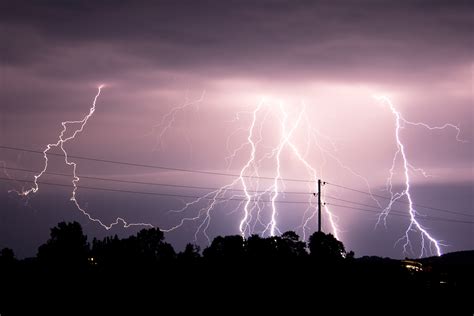
Most of this psalm describes the awesome noise and effects of violent weather events. These storms gather over the Lebanese mountains with a ferocity that can demolish the massive oak trees that grow there. The tempests travel south over Israel and then crash over the Kadesh wilderness south of Israel. They can create a flood, startle a pregnant deer into birthing, or strip a forest bare.

David knows the awesome power of these storms—their thunder, lightning and floods. He’s been exposed to their raw power. And in these experiences, he knows he’s hearing God speak.

Worship does not come naturally to us sinners. We can be full of ourselves and not aware that everything around us is made by God. Everything belongs to him. He’s still in charge of everything. And we need his protection and blessing if we want to live truly.

Sometimes, it takes the unmanageability of our environment or circumstances to realise that we are not in charge. The great one in our world is God. And he speaks.

Other psalms encourage us to call on God to be saved from storms like this, but here, we are being encouraged to hear God speaking in the events we can’t control.

Note that David calls God, the LORD—the one bonded to ancient Israel in a covenant. He doesn’t need a lifetime of sunny days to know that God is good. He looks at circumstances through the lens of what God has already done for his people, and what he has promised to do in the future.

The same is true for us. We know that God is good because he gave us his Son, and forgiveness, and eternal life. We certainly don’t need to see difficulties as punishment for sin. That’s over!

But we can tremble when that natural world seems to be breaking apart.

Nothing can quieten the din of storms, or prevent the damage they leave in their wake. We may be terrified. We can only wait until they are over. Our self-importance shrinks.

But now, look at the beginning and end of this psalm.

David begins, not by offering his own praise but by asking angels to worship the Lord. (Sons of God are angels in 89:6; angels are also asked to worship in 103:20; 148:2). Worship of God is core business. Every creature needs to be involved.

These angels are not affected by our weather, but they see what happens here. They are appointed as servants to our needs. They will listen if we ask them to worship with us. There are dressed in holiness. They see God face to face. Perhaps they can do justice to the praise due to God. As one of our hymns says, ‘Angels helps us to adore him. You behold him face to face.’

And then, David ends with a prayer. May the Lord give his people strength, and bless them with peace. Without these gifts, we languish, and the world perishes. But then, if God reigns over the flood—of whatever kind—he is able to send strength for our tasks, and peace in our trials.

Our God does reign. His Son has been raised from the dead, and been given authority over everything in heaven and on earth. We can be assured we are heard when we cry to him, and that he will give us strength and peace.

There’s usually one big flood in mind when the Bible mentions a flood—the one in Noah’s day. Certainly, God reigned over that flood. And everyone who belongs to Christ is protected when God sends judgement. That’s what Isaiah tells us (Isa. 54:9). We’re not merely exposed to the elements. We’re in God’s ‘ark’.

So, let’s pray.

Holy Father we languish and are starved when we think only of what we can see and control. You have made us to be in awe of you, to know you, to love you. To cry out, ‘Glory!’

Lord, you are worshipped by multitudes of angels. Expand our affections to ‘see’ what they see, to tremble where they tremble and to give our undivided attention to your glory.

Thank-you for humbling us—exposing us to the raw power of your creation and weaning us from preoccupation with how great we are. Help us be attentive to you and your works. Expand our affections. Deepen our humility before you.

Father, we know that everything you do is so we may know your strength—to be strong in the knowledge of your power. And that we may know your peace—because our hearts are fixed on you. Lord, fulfill this purpose in us, through Jesus Christ our Lord. Amen

Saved from futility

‘What’s the use?’ We’ve probably heard that said, or said it ourselves. Nothing’s working and our time’s being wasted.

An old Greek myth tells the story of Sisyphus who is punished by being made to push a stone up a hill, only to have it roll down again when he nearly gets to the top. And he must do this forever! We now call a job that’s laborious and useless ‘sisyphean’.

That’s what life in this world is like—without God. Useless. And Christians have been saved from the futile ways we learn in this world (Ephesians 4:17-20).

In times past young believers were worshipping idols. And, of course, calling something a god when it can’t hear, think or act is futile. Nothing is going to happen by talking to it or offering it a bribe.

And the kind of life that grows from worshipping idols is also futile. There is nothing above us to lift us up. There is only a recycling of the mess we are already in.

Our own world dismisses giving reverence to God—any god. But we haven’t stopped worshipping something. We’ve been designed to look up and to be in awe of something. And people still say, ‘I just had to do that.’ It’s part of our being human to be compelled by something greater than ourselves.

If we don’t know the true God through his Son, Jesus Christ, we’ll install something in his place.

One writer (I’ve put a link to his article below) thinks self-worship is now the world’s fastest growing religion. This ‘religion’ or ideology teaches that each person’s own thinking, their emotions and choices, goals, values and creativity must determine everything else.

But then, he says, ‘When we try to be our own sources of truth, we slowly drive ourselves crazy. When we try to be our own sources of satisfaction, we become miserable wrecks. When we become our own standard of goodness and justice, we become obnoxiously self-righteous. When we seek self-glorification, we become more inglorious.’

Paul would say the same now as he did a long time ago. Without the true God, our understanding is darkened, not enlightened. It’s ignorant, not informed. It’s hard hearted, not sensitive.

It’s into this situation that God sends Jesus to live, and die, and rise again. He has come to lift us out of all this. That’s why Peter talks about being rescued from futility (1 Peter 1:8-19). Without him, we are slaves.

If you believe that the only things that are real are physical, it may seem strange to hear your way of life called futile. That’s why it’s important to look at the light God has sent into the world.

The story is told of a rebellious sailor who is lowered down into the empty hold of his ship as punishment. He has no light, no company. Only bread a water let down on a rope each day. Several days go by and the sailor defies the call to change his ways and return to the deck. So, the captain lowers a lamp down instead of the food.

Now, the sailor can see his surroundings—the filth and the vermin, and himself as part of it all. Quickly he asks to be pulled up out of his prison.

The way we are brought up, the way of life around us, seem normal. We can become accustomed to shallowness, to lies, and lust, and hollow laughter. Until, that is, we see Jesus Christ.

The only way to be freed from the futility of this world is for someone to pay for us—to be bought like a slave. And then be set free. That’s what ‘redeemed’ means in what Peter says.

God knows we are in the dark. He also knows we like being in the dark. We think it’s the only way to stay in control of our lives.

But then, God lets us see how bitter we have become—by letting us human beings kill his Son. He lets us see the meaning of love by his Son asking for us to be forgiven. He shows us there is a new way by raising his Son from death. We can begin to hope.

This is what it means to be ‘redeemed from the empty way of life handed down to you from your ancestors…with the precious blood of Christ’.

All that the world has when it doesn’t want God is cravings.

Interestingly, one of the world’s religions—Buddhism—is focused on shutting down desire because it is the source of all our unhappiness. But desire is part of being alive! We want things. That’s what gets us up in the morning. It’s what makes us work hard and take risks.

What makes desire a problem is that we do not have God as our Father. Nothing we get is ever enough. It wasn’t meant to be enough. Only God can be ‘enough’. Under him, our desires are governed. Without him, they become insatiable.

We try to have a full life by letting rip with whatever we want. But without God, we generate endless unrest. We find ourselves yearning for what isn’t ours, or boasting about what we’ve done (1 John 2:15-17). But it’s all a temporary ‘fix’. If it doesn’t come from the Father, it won’t last. It’s futile.

But then, what if we come to know God as our Father? Our passions are under his care. We listen to what he says. We copy the way of life lived by his Son. We have something that will last forever. It begins to feel solid—even in this world. It’s not futile. We’ve be rescued.

It doesn’t take much experience, and honesty, to recognise that something isn’t solid just because we can see it. Why not, every time to find yourself getting fond of this world, taking another look at Jesus, and what he has done. Ask why he took so much trouble to show us what’s real. Ask if you can afford to give your life for what is passing away.

You can hear my talk on this topic at https://www.youtube.com/watch?v=6kb4sbuJsus

Article: Self Worship is the world’s fastest growing religion; Thaddeus Williams