God is letting us know we matter to him (Rom. 1:18-32)

In this brief look at Romans, we’ve already seen Paul’s delight in and focus on God’s good news. God is showing us his righteousness. And he’s revealing it by declaring that those who trust him are also right—in his eyes. Given our constant desire to be ‘right’, it’s hard to imagine any news that could be better—but more about this later.

In the mean-time, there’s something else to say. Paul doesn’t forget his theme. He returns to it, in almost identical words, as soon as he can[i]. But he knows that we need to discover something else first.

Another revelation is happening at the same time. It’s God’s wrath. Our Creator is not content to let us go our own way. He’s not happy with us. And he wants us to know that we matter to him.

Now it may seem to be contradictory for God to reveal that he has a gift for us, but at the same time, to reveal that we are in trouble. But then, it makes perfect sense. You can’t give anyone something they don’t want. And they won’t want it if they think they already have it. And they may be offended if you offer them what they think they have.

So, if it’s good that God is revealing his righteousness, it’s also good that he is revealing his wrath. We need to know what we need.

Paul talks about Gentiles first—people who haven’t grown up knowing about God’s revelations in the Bible. Then he speaks to Jews who, for ages, have had the benefit of hearing what God has to say. 

So, to the first group—to the world in general, here’s what Paul says[ii].

First, God is always revealing himself—to everyone. This is not offered as a proof. It’s a personal communication.

Everything we can see, including ourselves, is evidence—a never ending supply of it—that God is real and present and engaged. So, if we say he isn’t real, it’s because we’re choosing not to know him.

Second, those who reject God must elevate something else to take his place. We can’t exist without someone or something to look up to. So, we worship what is made, or something we make—anything but God himself. And something we can attempt to control.

Third, because we are disconnected from what is real, our thinking and affections become—over time—pointless and dark. God gives us up to the results of our choices [iii].

Paul lists a number of things that would have been clearly visible in the first century Roman world. He mentions impurity, passion and sexual license. Community life is rife with everything that makes it hard to live together—envy, deceit, malice, slander and boasting, for example.

Here’s where we need to read what Paul says carefully. What is provoking God to wrath is not, first of all, what people are doing but what they are believing. They’re living as though he doesn’t exist. Their behaviour is a consequence. It’s what God has given them up to—to awaken them to where their choice leads.

They think they have dismissed God, but what they are doing is happening because God has given them over to their own choices.

And of course, what Paul says about the first century world is happening in our communities as well. The evidence for God is abundant. And so is the evidence of what happens when we dismiss him as irrelevant.

Disbelief in the true God is a majority position in much or our world. So is the idea that we should be free to follow our own passions. And so is the belief that prosperity and happiness follow when we remove restraints.

But the generations that are abandoning faith in God in our communities are not growing richer, stronger or happier. And if we can see that this is happening, we are watching God revealing his wrath.

And, interestingly, if we choose to live without God, we have to congratulate each other for choosing our own life-style. Everyone has an inbuilt need to be acknowledged as right. So, because we don’t know the righteousness of God, we have to create an approval of our own. Only this can explain the constant stream of ‘virtue signaling’ that we are hearing.

We’ve come to the end of this first section. But next, there’s a section, three times as long, to show that we are all in the same predicament. Paul talks to those who believe in God.

For Paul’s first century world, this is Jews. For us, it is ourselves who go to churches, read Bibles and say prayers. I hope you stay with this! Paul will show that God’s wrath, rather than being ‘revealed’, is being ‘stored up’[iv].

If we don’t understand ourselves or our predicament, we may not understand the message God wants us to understand—that real righteousness always comes to us as a gift.

I hope you are encouraged by all this. God is not content to stand by and see what happens. He’s revealing himself—to everybody.


[i] Rom. 1:17; 3:21

[ii] Rom. 1:18-32

[iii] Vv. 24, 26, 28

[iv] Rom. 2:5
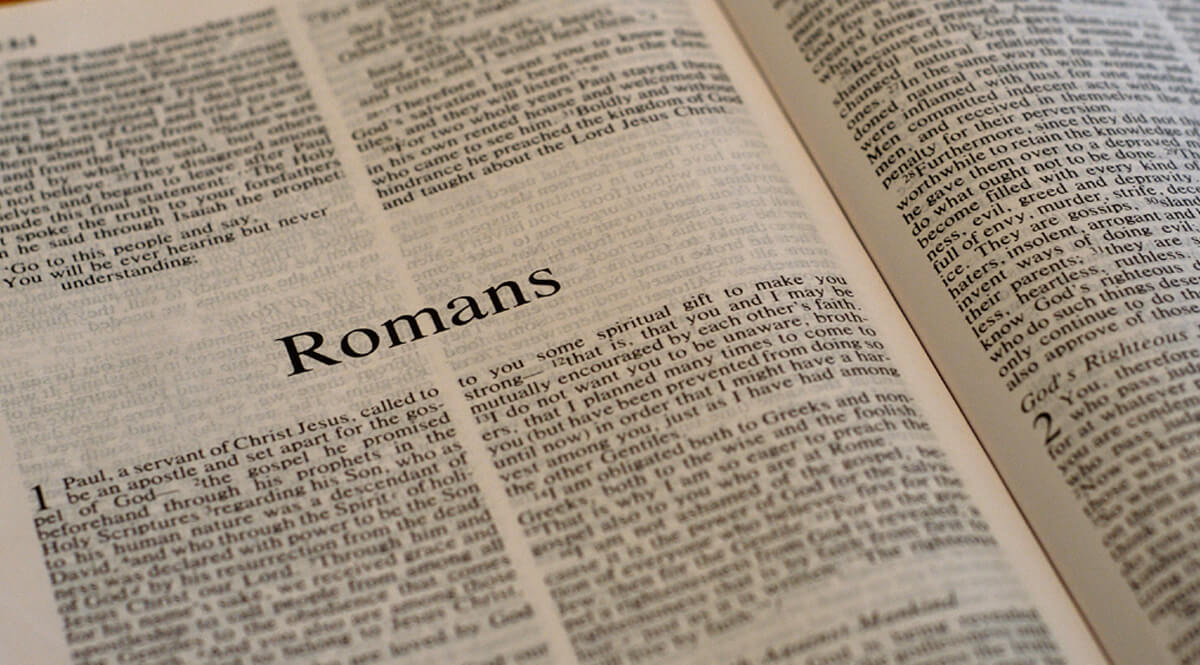
With love, from Paul (Rom. 15:14—16:27)

In this wonderful letter, Paul has spelt out the gospel that Christ has revealed to him. He’s shown us why righteousness must come to us as a gift, how Christ has created the gospel in his own life, death and resurrection, and how this works out in different areas of life. But now, Paul concludes, as he began[i], by sharing something about himself with us, his readers.

Paul explains why he’s writing (vv. 14-16), what’s been keeping him busy (15:17-22), where he is placed now and what he is needing (15:23-29), and asks his readers to pray for him (15:30-33). And he adds numerous personal greetings (16:1-27).

But I would like to focus on three different roles Paul plays in this conversation. Here they are.

First, Paul is an apostle to Gentiles.

Jesus has sent him to ‘open the eyes’ of Gentiles with the good news of Christ. In this way, they will be sanctified by faith.[ii] Their false ways have made them unclean. But, through the gospel, people of all nations are being washed and sanctified.[iii] In other words, they are proper company for God and for other Christians.

And what a ride it has been! Over two decades, Paul has become a presence to reckon with in Jerusalem, Syria, Asia Minor, the Grecian peninsular, and is now planning a visit to Rome, and then, to Spain.

But it’s not just the geography Paul has in mind. It’s what Christ has been doing—in him. Jesus has not just been a story to tell. He, himself, has been the presence to be reckoned with—Jesus present in the work of the Holy Spirit, persuading Gentiles to turn to Christ. And now, it’s Christ who will see to it that the gospel will go on being heard—through the churches already planted. So, Paul believes that his work in these areas has been done.

The reason he comes to this conclusion is that he is thinking of a prophecy about Jesus in Isaiah.[iv] The suffering Saviour will ‘sprinkle many nations’, and make them clean, by being ‘crushed for our iniquities’. And kings will ‘shut their mouths because of him’.

This is exactly what has happened. People have seen the love of God in Christ, they are amazed. They are hearing ‘things they have never heard before’. These last words have guided Paul to focus on places where no-one else has preached. He wants everyone to know the grace of God. As he explains later on—in a Roman court—‘I was not disobedient to the heavenly vision’.[v]

Second, Paul is an apostle to the whole church.

Paul expects that his visit to Rome will be a blessing from God to them.[vi] His letter has been addressed to Gentiles there, but also to Jews. And his letter has included some pertinent reminders and exhortations.

In doing this, Paul dismisses anything that would elevate him unduly or suggest they were unable to look after their own pastoral care. But his letter has revealed that his grasp of the truth and it’s working out among the nations is broad and thorough. It would be wrong for him not to share this truth—with his readers and, of course, with ourselves.

Consider the many things going on in Paul’s mind as he writes his letter.

He’s taking a gift from grateful Gentile Christians in Greece to needy Jewish Christians in Jerusalem—something he sees as very appropriate. But then, he’s hated by unconverted Jews in Jerusalem and knows his trip will be risky. And he’s thinking about the questions Jerusalem Christians have about his ministry to Gentiles and wants them to receive him and this Gentile gift well. And now, he’s thinking about Rome.

Paul is truly an apostle to the whole church—encompassing its complexities, feeling its pain and sharing its joys. And he asks the church in Rome to share in making all this successful by praying for it to be so.

So, for ourselves, it would be wrong not to listen to what Paul says in this letter. Our Lord Jesus wants us to be a Holy Spirit sanctified offering that he can bring to his Father. And this letter is part of the way he will enable this to happen. It’s not surprising the letter to the Romans has helped believers for 20 centuries and shaped the lives of many generations.

Third, Paul is a man with many friends, and here, he sends greetings to numbers of them.

Phoebe has been courier for this letter and, previously, has helped Paul in numerous ways. Now Paul ensures that her welfare in Rome is not overlooked.

Another 17 people are mentioned by name. Some are Jews like himself and one senses that he feels grateful for this. Others have shared jail time with him. He knows them all deeply, and sometimes, their family, or the church meeting in their house. He knows the significance they have had for others, and sometimes for himself.

Prisca and Aquilla have endangered their lives to help Paul, and many churches have benefited from their service. Others whom Paul mentions are simply deeply loved. He recalls the coming to faith of some.

All this mutual care is not just people being nice to each other. It happens ‘in the Lord’—that is, because of the Lord and because believers are sharing in his life. The phrase occurs some 10 times.

It’s hard for us to keep our own ego out of how we relate to others. We’re thinking of ourselves rather than about them. That’s why it’s very practical to relate to others ‘in the Lord’. We need all the teaching in this letter about being in Christ, and we need to decide over and over again to let the love of Christ shape the encounters we have with others.

We could say that this list of greetings brings the letter to a climax because we are seeing the result of having a gospel where Christ has taken over the lead role on our ‘stage’.

So, Paul greets all his friends, drawing them to himself in affection. And he asks everyone in the church at Rome to do the same.

And then, apostle that he is, Paul calls the church in Rome to be clear about their doctrine, to be aware of those who want to be the centre of attention rather than Christ and his truth.

And he calls the believers to be wise. Gaining wisdom takes time—a long persistence in the same direction.

For our encouragement, Paul concludes with this invigorating hope. Believers have found peace with God through Jesus Christ. This is the environment we occupy and the security we enjoy. And soon, God will crush Satan under our feet! This is the battle that Christ alone could win. But now, standing in his victory, all of us believers will also see him fall under our feet. The battle need never again disturb our conscience or our hopes.


[i] Rom. 1:1-15

[ii] Acts 26:16-19

[iii] 1 Cor. 6:11

[iv] Isa. 52:15; 53:5

[v] Acts 26:19

[vi] Rom. 1:11-15