Jesus as Leader and Saviour

What do we have in mind when we confess that Jesus Christ is Lord[i]. What do we mean by saying he is the Christ, and that he is our Saviour? These are the claims Peter makes for Christ when the church is born.

These claims are basic to our faith. They are also basic to God because it’s his way of fulfilling his plan for our world. They tell us that Jesus alone can secure our life and future.

But in a world that scorns any authority but its own, what do these statements mean to us personally? You probably feel as I do, that the distain of the world for anything unseen can seep into our own souls and dim the joy that is appropriate to us having such a great Lord.

The answer of course, is to let the word of our Lord Jesus Christ have full play in our minds and affections—and in our Christian communities.[ii] And I’m trusting that some simple articles about the authority of Jesus will be some help along the way.

The early chapters of Acts spell out the church’s early experience of Christ as the risen Lord and we can learn much from them.

God has demonstrated that Jesus is Lord, and Christ, by raising him from the dead. These are the two points Peter makes on Pentecost day. But there is another phrase he uses a little later, he is Leader and Saviour, and I’ll begin there.

Peter uses this phrase after he and the other apostles have been arrested. He is responding to authorities who oppose their preaching. But they must obey God rather than man. God has raised Jesus from the dead and seated him in heaven as Leader and Saviour.[iii]

Peter has also used the word meaning Leader, when speaking to people in the Jerusalem temple, and after healing a lame beggar. But there it is translated as Author.[iv] Israel has killed no less than the Author of life.

Here is leadership unlike anything humans can do. We can only arrange and provide for people as they are. We can’t make them different. But Jesus is the Author of life. We were dead to God. But through Christ, we are alive to God and ready to live for him.

The disciples have been introduced to this leadership of Jesus by being with him physically. They have seen him dealing with human need. They have concluded that only he can bring them to God. And they know they can’t go to anyone else.

But now, the mighty events of Christ’s death and resurrection have happened. And the disciples have discovered the shallowness of their relationship with Jesus.

And yet, this resurrected Jesus has carried straight on. He’s picked them up from their failures and taught them to live by his grace. He’s taught them, over several weeks, about the kingdom he is going to establish and administer. And before he’s taken to heaven, he affirms that ‘All authority has been given to me in heaven and in earth’.

Jesus now exercises that authority, leading his church from heaven. He’s no longer visible but he’s still in charge. Jesus has told the disciples that it will be better for them when he goes because he will then send the Holy Spirit to them.[v] And, of course, it is better for us all that the authority of Jesus is being exercised, not from earth but from heaven—by the Holy Spirit being among us.

The apostles wait until the Spirit comes. And come he does!

The Holy Spirit, who has previously spoken only to prophets, now speaks through some 120 people, simultaneously[vi]—and in a variety of languages. Jesus has acted. He is in heaven, but all of them know he’s in charge.

They are enabled to speak about God’s mighty works.[vii] And then, Peter explains what these mighty works are.

There’s the mighty works God did through ‘this Jesus’ while he was on earth.[viii] But these did not establish his authority. We—represented by those there at the time—killed him.

But Jesus has done exactly what has been needed. He’s done what his Father wanted. He’s loved us, and laid down his life for us. This is the mightiest deed that has ever been done.

But the mighty deed that Peter must speak about is God raising Jesus from the dead. This is not just a message about the authority of Jesus. It’s the good news we’ve all needed to hear.

Jesus is not only Leader. He is Saviour.

Notice how much attention Peter gives to King David’s anticipation that death will be overcome.[ix] The great work God is about with us human beings isn’t meant to finish with a funeral!

However, apart from this Saviour, death hangs over all of us. It’s like a shroud we wear prematurely.[x] It affects our approach to everything we do. It keeps us trapped.[xi]  We try to make ’heaven on earth’ for ourselves.[xii] And it’s not just that we die that matters to us. Underneath all our protests, we know we’ll get what we deserve.[xiii] We share the same fault as Adam, and the same fate.[xiv]

This shapes our attitude to God and his purposes. We resent his final control over our destiny. We’re trapped in resentment and hostility.

But no longer. Jesus has taken our fault as his own, and suffered our fate—in our place. That’s the love he has for us.

And this man, this Saviour, is alive again—alive to his Father God. And in him, so are we! So, if we’re trusting in him, death no longer has the final say about our identity, or destiny. We know God and know we already have life that is eternal.

And then, there’s another strand to this. Think of the dead weight failure produces in us. Think of the remorse we feel for lost opportunities. Think of Peter and the other apostles. None of them has been the disciple they thought they were.

So, how glad Peter must be to announce the forgiveness of sins![xv] He is not a good man correcting other people who need to be good. He is just one sinner telling other sinners what Christ has done with our sins and with their result.

Neither death or sin has the final say about our life, or future. Forgiveness, and eternal life, now now announced to us in Jesus name.

We remember that the thief who died on a cross next to Jesus asked to be ‘remembered’ when Jesus came into his kingdom—or authority. Now, on Pentecost day, thousands are lining up to be included. ‘Lord, remember me too!’

Clearly, what we really need is not a strong man to represent our interests, or resources enough to secure our future. We have needed, and now we have, a Leader and Saviour who acts from above, who acts truly, who does what will change the future—or, as we say, make history.

We need God! And Jesus brings us to him—clean, unashamed and ready to share in his agenda. We’re not helpless, hopeless victims. We’re sons and daughters of God.

Here is a Leader and Saviour to love and to follow, to trust and to delight in!

Next time, we’ll look at Jesus as the Christ, and after that, as Lord, and finally, as Son of God.


[i] Acts 2:36; Phil. 2:11

[ii] Col. 3:16

[iii] Acts 5:27-31

[iv] Acts 3:15. Archegos can be translated as author or leader.

[v] Jesus mentions this three times—in John 14:16; 15:26; 16:7

[vi] Acts 1:15; 2:1-3

[vii] Acts 2:11

[viii] Acts 2:22

[ix] Acts 2:25-31

[x] Isa. 25:6-9

[xi] Heb. 2:14-15

[xii] Luke 12:19; 1 Cor. 15:22

[xiii] Heb. 9:27

[xiv] Gen. 2:17; 3:19

[xv] Acts 2:38-40

Christ is risen! But where’s the Hallelujah?

We’ve just had our Easter celebrations and I found myself needing to be renewed, so as to give thanks with a full heart.

We can get distracted, self-sufficient or inward—looking at things that are seen and felt rather than things that are unseen and eternal.

So, here’s my answer to myself—what the Psalms would call ‘lifting up our hearts’, or what the apostles would call ‘setting our minds on things above’. This is not a study. It’s just telling the truth to myself—and to us all.

The first disciples are glad when they see their Lord Jesus alive again.[i]

I should say so! Their whole life has revolved around him for three years. They have hoped for eternal life through him. They have expected the restoration of God’s reign on earth. None of this will happen without his presence, or with the way they have behaved through this crisis! But now, he’s with them!

And he’s still here. He said, ‘I will be with you always.’[ii] Our Leader and Saviour is not a memory. He’s a presence.

So, speaking personally, here’s what it means that Jesus has been raised from the dead. He comes to me with all that he has achieved as God’s Son and my Saviour.

First, the resurrection of Jesus means I’m justified in God’s eyes[iii]. He sees that I’ve turned away from self-trust, and he’s happy to count me in on what happened to Jesus.

Here’s how this works out. Jesus pleases God—totally—especially in being the willing offering for our sins. So, God vindicates or justifies him[iv]. That’s what I’m sharing in. The Father has reason to be pleased with his Son. But because the Son carries me with him in his love—through death and into resurrection, he is also pleased with me—a grateful recipient of what he has done.  I’m accepted—in the Beloved Son[v].                       

Like Peter, I’m aware of failures. But then, because of Christ’s resurrection, I’ve also been born again to a living hope. Christ’s alive, and so am I—alive to God and alive with a hope of transformation[vi]. Christ says to us all, ‘Peace be with you’[vii]. And like Thomas, I say, ‘My Lord and my God!’

So, I’m ‘all ears’ when it comes to the resurrection!       

Second, Christ’s resurrection means I’ll also rise from the dead[viii].

The Father always planned that the resurrection of Jesus would be the first one of many[ix]. We are the rest of the fruit that will make Father and Son deeply satisfied.

This wouldn’t be important if I’m living as though I’ve got forever. But I’m ‘numbering my days’. It’s wiser to do that[x].

So, there’s no shame in my death. No victory for the accuser. And it won’t be a terminus. I’ve been given eternal life and will be raised up again[xi]—with a better body and a better location. In fact, my present flesh is not good enough to inherit what God has prepared[xii].

Knowing I’ll be raised from the dead is not just a consolation. It’s a victory. I’ll see the Lord! And there won’t be a reason to cry ever again. The whole creation will be what it was created to be—and I’ll be part of it. And then, even while I’m getting weaker, God sees to it that I’m being inwardly renewed[xiii]—getting ready for the big day. 

I’m already living this eternal life[xiv]. So, right now, I can do things that will last forever[xv]. Life is full of purpose.

The difficulties along the way are lessened by knowing this. Jesus tells me to only deal with what must be done today[xvi]. And this leaves head space for the coming victory to shed its light back over my troubles—for God to fill my days with joy and peace in believing[xvii]. God is always doing something—for my good and for his glory[xviii].

Third, I have a narrative to live in that’s full of hope instead of pessimism.

Running and approving my own life, as Adam tried to do—is never workable. Rather, I’m free to live as God intended—receiving his gifts, his blessing and approval. And then, I will eat from the tree of life and live forever.

This world will never be a Garden of Eden. And my attempts to make the world perfect will never succeed. But Jesus has bruised Satan’s head. And the victory of Jesus, not the failure of Adam, dominates the narrative. He’s in charge.

Many around me drown their loss of immortality with ambition, self-indulgence, fun or bluster. But eating, drinking and being merry is what you do when you’re just expecting to die. Better by far to live in God’s story.

And so, I say, ‘Christ is risen. Hallelujah!’


[i] John 20:20

[ii] Matt. 28:20

[iii] Rom. 4:25

[iv] 1 Tim. 3:16; cf. Rom. 1:4

[v] Eph. 1:6

[vi] 1 Pet. 1:3

[vii] John 20:19, 21, 26

[viii] 1 Cor. 15:19-20

[ix] 1 Cor. 15:20-24

[x] Psa. 90:12

[xi] John 6:54

[xii] 1 Cor. 15:50

[xiii] 2 Cor. 4:16

[xiv] John 17:3

[xv] 1 Cor. 3:12-13

[xvi] Matt. 6:34

[xvii] Rom. 15:13

[xviii] Rom. 8:28, 37

God’s surprising authority

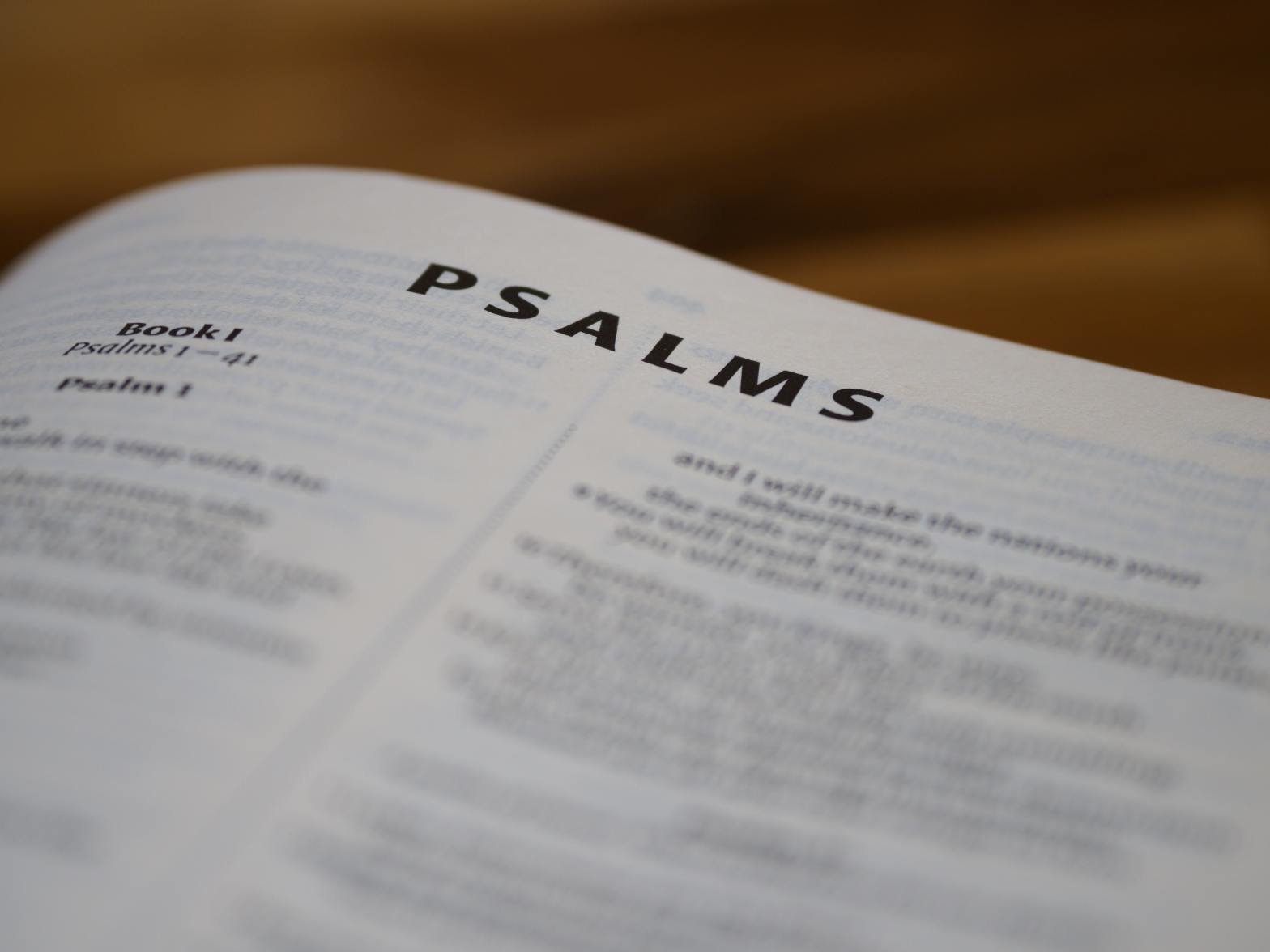
This second Psalm, like the first one, is about people being made happy by God. The first one began with ‘Blessed is…’, This second one ends in the same way.

Together, they are introducing us to two themes that intertwine throughout the Psalter—a life that pleases God, and the gracious reign of God that makes it possible.

So, we come to the second Psalm.

I can’t think of a prayer more needed than the one this Psalm inspires. It confronts the world’s opposition to God and announces the sovereignty of Jesus Christ whom God has appointed to be in charge.

Why do the nations rage so badly and so constantly? This anger is not just between nations but with God. It’s this argument that leads to our problems with each other. And it is a fury without basis—it’s empty or vain. There is a mountain of evidence that God is good and that we can trust him.

We’ve had this problem from our beginnings. Cain kills his brother because of his witness to God’s goodness. He needs to remove the evidence. Years later, the human race does the same to the Son of God.

That’s how old the problem is. And it hasn’t gone away.

But God always goes right on with his plan. He raises up a nation, and appoints (anoints) a king to lead them. Here, in Psalm 2, the King is David.

David understands that his job is not just being strong but about Israel being a witness to the nations. It’s not about power but about God being good. This is why he’s confident about killing Goliath with a sling shot, not because he can aim well but because this godless man has taunted Israel’s God (1 Sam. 17:36).

David’s successors are also called to lead Israel in being God’s witness to the world. They do not do this well, but they are signs of the King whom God will appoint—no less than his eternal Son.

This Psalm was probably used for the coronation of Israel’s kings, but it predicts the coming of Jesus, born to be ‘King of the Jews’ (Matt. 2:2).

That’s why the early church quotes this Psalm—or, if your like, prays this Psalm—when they encounter the rage of their religious leaders (Acts 4:25-26).

And here is why we need this Psalm to help us pray. When the world hates God, they threaten us. It’s then that we need to know that Christ’s authority is not in question. The arguments against him are not only invalid but lifeless. They can’t succeed.

Here’s the reasons.

First, God himself announces that Jesus is his Son. He says this when Jesus is baptized by John the Baptist (Luke 3:22). He does it again when Jesus is transfigured before some of his disciples (Luke 9:35). He does it again by raising Jesus from death—right here in our history (Romans 1:4). He is saying to the whole world, ‘You need to hear what my King is saying!’ (Acts 5:30-31).

Second, God has promised the nations to Jesus as an inheritance. Opponents to this purpose will be shattered. All nations—the people of all nations, must hear the witness of Jesus that God is good. They must receive the forgiveness and restoration to sonship that he is offering.

Third, the gentleness of Jesus—God’s King—is like a rising tide, unstoppable. He is all of God’s goodness wrapped into one human body. He is also all of God’s authority. Resisting his witness is fatal.

Everyone should get wise, be warned. Especially those who think they are in charge. Everyone should humble themselves to serve God and to reverence his Son—our Lord, Jesus Christ.

When we hear his voice and receive his grace, we understand the meaning of authority. We are delighted, and tremble—all at the same time. He has our full attention.

So, let’s pray.

Father in heaven, we humble ourselves before you. Our anger against you has not been justified. Our boldness has been childish.

You have watched our strutting, amazingly, with patience. And you have continued to reveal what you mean by ‘running the world’ through raising your Son—whom we killed, and giving him authority to raise up a new humanity.

Father, when we are attacked by those who don’t understand how you rule the world, give us the same patience and grace as your Son has demonstrated. And the same confidence in your authority.

How good to know this world is a family affair—that all the nations are a gift from you to your Son.

Help us see through the bluster of those the world calls great. Help us to see the gracious and powerful authority of your King—our Lord Jesus Christ. And tremble before him, with delight! Amen.