
Our Creator is at rest, so we can be too

We’ve come to the end of God’s week of creation—the seventh day.[i] God has finished all that he’s wanted to make. This may sound like a dull day because nothing happens.

But this is far from the case. Everything has been leading to this day. And God’s project has a goal. This will become clear as we look at the four new factors that have not been present on the other days.

First, God rests. This is made emphatic with repetitions. He’s finished ‘all the work that he has done’. His work doesn’t need any corrections or additions. He can really rest.

We all know the agitation that festers when we’re not content with our work. This is not God’s problem. And he certainly doesn’t need a day off like we do. Rather, he’s resting with delight in all he has made.

Second, unlike all the other days, there’s no statement announcing an end to this day.

This is not a detail to overlook. The whole narrative is well thought out and carefully worded. We’re still in the seventh day!

In other words, for the duration of our human history, God rests in the rightness and adequacy of his creation. He’s not inactive of course because the Bible is full of other things he does.  In fact, he’s busy making sure we can share this kind of rest with him.

This thought is confirmed by the way the word ‘rest’ is used as the Bible story proceeds.

Noah’s name sounds like the Hebrew word for ‘rest’.[ii] His parents know the ground they plough has been cursed, and they long for rest from their painful toil.

Later on, God promises to deliver his people from slavery in Egypt, to give them a land where they can rest.[iii] Slavery, wandering and warring will be behind them and they will be free to enjoy a flourishing land.

And God pitches his tent among their tents, and eventually a temple among their houses, and he calls it his resting place,[iv] the place where Israel can meet with him and share in his rest.

Israel comes to their promised land but their rest doesn’t endure because they cease believing in their God.[v] So he appoints another day for this rest.[vi]

And it’s Jesus Christ who brings us this rest. Remember his promise? ‘Come to me, all you who are weary and heavy laden, and I will give you rest.’[vii] Jesus is reintroducing us to the structure and atmosphere of peace established when the world was made.

This is followed up by the writer of Hebrews. He says God’s rest is still waiting for us. Finally, this will be the world to come, but he’s telling us about something we can start to enjoy now—by trusting in Christ.[viii]

It’s defined as resting from our works like God did from his. Clearly, we are meant to be busy and working usefully, but we’re not meant to be doing things that only God can do. In context, this must include trying to be our own High Priest and reconciling ourselves to God. Restfulness starts with trusting Jesus to do this.[ix]

One of Israel’s Psalms tells us it’s God who really gets things done, and that it’s useless being anxious because God can supply our needs even while we’re sleeping.[x] Jesus says the same.[xi] Fretting is forgetting that we live in God’s world, and that it’s his rest day.

All this is good news, but our desire to flow with the world, or to take the credit for our accomplishments, gets in the road. We need to put some effort into enjoying this rest![xii]

Third, the day is blessed.

A blessing is not just wishing us well. God has blessed fish and birds so they can breed. And he has blessed us so we can have families, and, so we can properly exercise authority in the world.

So, when God blesses this last day, we know that the time we spend in this world is going to be fruitful. Again, the Bible is full of encouragement to trust in the sureness of God’s blessing rather than to press our own agendas and frustrations.[xiii]

But how does this blessing relate to the curse that God has put on our ground? Clearly, our work is harder now. And there are constant difficulties and tragedies. We all feel them.  It’s easy to look at what is not working out in this world and conclude that the curse is all there is. Not true! God is ready with blessing for those who seek him. And it’s by looking for his blessing that we are enabled to live and even to overcome some of the difficulties we face.

This is what happens when we trust in Christ. Being turned away from our sins is a blessing![xiv] None of us can live truly with a load of guilt hanging around our necks. And receiving what Christ has brought to us—being holy and blameless before God for example—is a blessing.[xv]  Our humanity is restored. We know and love God. We love doing his will.

It’s then we know that we are still living in the long day that God has blessed.

And fourth, the seventh day is declared holy. It’s dedicated to God. All our history is for him.

It couldn’t be otherwise of course. He put it together, knows how it works and graciously maintains it and moves it on to its goal.

But we need time to keep this reality clear in our thinking. The pattern of God resting on his seventh day is included in the ten commandments—and in greater detail than any other command.

It’s important for us human beings to stop, like God, and to know that it is by his sovereignty that we have what we have, that it is by his blessing that we achieve what we achieve, and that the future is in his hands and not in ours.

And we need to know that God can keep his world running without us! We can rest from our labour periodically and know that God will sustain his creation.

No command is given by Jesus or the apostles about a rest day but when the resurrected Jesus meets his disciples on two successive Sundays,[xvi] the apostles know everything is different. A new creation has begun and they choose to use this day for worship, for fellowship and teaching.[xvii]

We’ve come to the end of this brief series on creation. And, from God’s point of view, he only finished making it yesterday!

We who trust in Jesus Christ have every reason to look forward to a new heavens and earth because we have the life of the new age already coursing in our souls.[xviii] And, as he has been raised, so shall we be. And the whole earth will be renewed—with no curse.

Creation will come to its goal. And on that day, we will be one with Christ as he hands this completed project back to the Father from whom it came.[xix]

So, God’s creation project is right on track.


[i] Gen. 2:1-3

[ii] Gen. 5:28-29

[iii] Exod. 33:12-17; Deut. 3:20; Josh. 23:1

[iv] Psa. 132:7f, 13f

[v] Psa. 95:6-11

[vi] Heb. 4:6-7

[vii] Matt. 11:28

[viii] Heb. 4:1-13

[ix] Sinclair Ferguson has some helpful comments on this at <ligonier.org/learn/articles/sabbath-rest>.

[x] Psa. 127

[xi] Matt. 6:25-34

[xii] Heb. 4:11

[xiii] Psa. 37 or 85 are good examples of this expectation. I may do a series on this later.

[xiv] Acts 3:26

[xv] Eph. 1:3

[xvi] John 20:1, 19, 26; 1 Cor. 16:2; Rev. 1:10

[xvii] Acts 20:7

[xviii] 2 Cor. 5:17

[xix] 1 Cor. 15:28
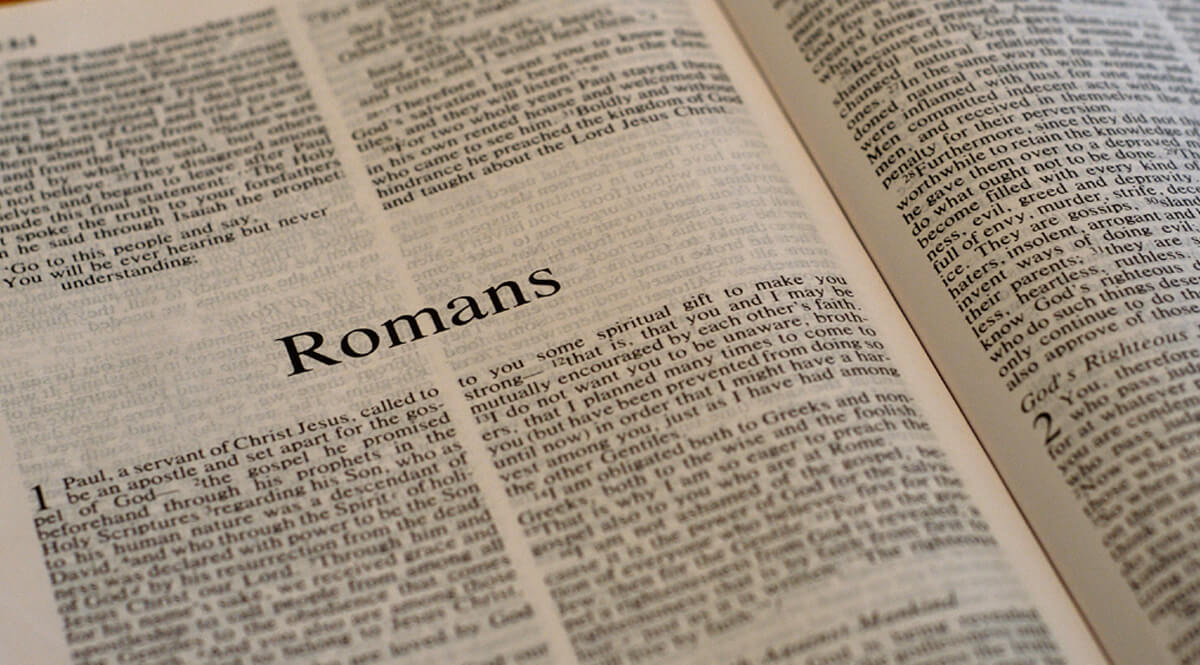
With love, from Paul (Rom. 15:14—16:27)

In this wonderful letter, Paul has spelt out the gospel that Christ has revealed to him. He’s shown us why righteousness must come to us as a gift, how Christ has created the gospel in his own life, death and resurrection, and how this works out in different areas of life. But now, Paul concludes, as he began[i], by sharing something about himself with us, his readers.

Paul explains why he’s writing (vv. 14-16), what’s been keeping him busy (15:17-22), where he is placed now and what he is needing (15:23-29), and asks his readers to pray for him (15:30-33). And he adds numerous personal greetings (16:1-27).

But I would like to focus on three different roles Paul plays in this conversation. Here they are.

First, Paul is an apostle to Gentiles.

Jesus has sent him to ‘open the eyes’ of Gentiles with the good news of Christ. In this way, they will be sanctified by faith.[ii] Their false ways have made them unclean. But, through the gospel, people of all nations are being washed and sanctified.[iii] In other words, they are proper company for God and for other Christians.

And what a ride it has been! Over two decades, Paul has become a presence to reckon with in Jerusalem, Syria, Asia Minor, the Grecian peninsular, and is now planning a visit to Rome, and then, to Spain.

But it’s not just the geography Paul has in mind. It’s what Christ has been doing—in him. Jesus has not just been a story to tell. He, himself, has been the presence to be reckoned with—Jesus present in the work of the Holy Spirit, persuading Gentiles to turn to Christ. And now, it’s Christ who will see to it that the gospel will go on being heard—through the churches already planted. So, Paul believes that his work in these areas has been done.

The reason he comes to this conclusion is that he is thinking of a prophecy about Jesus in Isaiah.[iv] The suffering Saviour will ‘sprinkle many nations’, and make them clean, by being ‘crushed for our iniquities’. And kings will ‘shut their mouths because of him’.

This is exactly what has happened. People have seen the love of God in Christ, they are amazed. They are hearing ‘things they have never heard before’. These last words have guided Paul to focus on places where no-one else has preached. He wants everyone to know the grace of God. As he explains later on—in a Roman court—‘I was not disobedient to the heavenly vision’.[v]

Second, Paul is an apostle to the whole church.

Paul expects that his visit to Rome will be a blessing from God to them.[vi] His letter has been addressed to Gentiles there, but also to Jews. And his letter has included some pertinent reminders and exhortations.

In doing this, Paul dismisses anything that would elevate him unduly or suggest they were unable to look after their own pastoral care. But his letter has revealed that his grasp of the truth and it’s working out among the nations is broad and thorough. It would be wrong for him not to share this truth—with his readers and, of course, with ourselves.

Consider the many things going on in Paul’s mind as he writes his letter.

He’s taking a gift from grateful Gentile Christians in Greece to needy Jewish Christians in Jerusalem—something he sees as very appropriate. But then, he’s hated by unconverted Jews in Jerusalem and knows his trip will be risky. And he’s thinking about the questions Jerusalem Christians have about his ministry to Gentiles and wants them to receive him and this Gentile gift well. And now, he’s thinking about Rome.

Paul is truly an apostle to the whole church—encompassing its complexities, feeling its pain and sharing its joys. And he asks the church in Rome to share in making all this successful by praying for it to be so.

So, for ourselves, it would be wrong not to listen to what Paul says in this letter. Our Lord Jesus wants us to be a Holy Spirit sanctified offering that he can bring to his Father. And this letter is part of the way he will enable this to happen. It’s not surprising the letter to the Romans has helped believers for 20 centuries and shaped the lives of many generations.

Third, Paul is a man with many friends, and here, he sends greetings to numbers of them.

Phoebe has been courier for this letter and, previously, has helped Paul in numerous ways. Now Paul ensures that her welfare in Rome is not overlooked.

Another 17 people are mentioned by name. Some are Jews like himself and one senses that he feels grateful for this. Others have shared jail time with him. He knows them all deeply, and sometimes, their family, or the church meeting in their house. He knows the significance they have had for others, and sometimes for himself.

Prisca and Aquilla have endangered their lives to help Paul, and many churches have benefited from their service. Others whom Paul mentions are simply deeply loved. He recalls the coming to faith of some.

All this mutual care is not just people being nice to each other. It happens ‘in the Lord’—that is, because of the Lord and because believers are sharing in his life. The phrase occurs some 10 times.

It’s hard for us to keep our own ego out of how we relate to others. We’re thinking of ourselves rather than about them. That’s why it’s very practical to relate to others ‘in the Lord’. We need all the teaching in this letter about being in Christ, and we need to decide over and over again to let the love of Christ shape the encounters we have with others.

We could say that this list of greetings brings the letter to a climax because we are seeing the result of having a gospel where Christ has taken over the lead role on our ‘stage’.

So, Paul greets all his friends, drawing them to himself in affection. And he asks everyone in the church at Rome to do the same.

And then, apostle that he is, Paul calls the church in Rome to be clear about their doctrine, to be aware of those who want to be the centre of attention rather than Christ and his truth.

And he calls the believers to be wise. Gaining wisdom takes time—a long persistence in the same direction.

For our encouragement, Paul concludes with this invigorating hope. Believers have found peace with God through Jesus Christ. This is the environment we occupy and the security we enjoy. And soon, God will crush Satan under our feet! This is the battle that Christ alone could win. But now, standing in his victory, all of us believers will also see him fall under our feet. The battle need never again disturb our conscience or our hopes.


[i] Rom. 1:1-15

[ii] Acts 26:16-19

[iii] 1 Cor. 6:11

[iv] Isa. 52:15; 53:5

[v] Acts 26:19

[vi] Rom. 1:11-15

What are we waiting for?

Trusting God’s promises isn’t always easy. It takes us into new territory. And we need to grow in faith. However, none of the difficulties involved need to tarnish our faith. 

God has opened his heart up to us. He’s calling us to discover his faithful love. And he wants us to live in this hope while we wait for his time of fulfilment. By promising us a future, God is enabling us to live in his eternal plan—now. But we need some perseverance.

Many of us have lived through very pleasant times. This has made us think God’s promises only relate to having more nice times. But God wants us to live in what the future will be—even while the present is proving to be difficult.

The letter of Hebrews has much to say about living by God’s promises—particularly towards its end (Hebrews 10:32—12:3). You may find it helpful to read this passage first. There’s five points that it makes clear. This makes my article longer than usual—but I hope, worthwhile.

First, our fathers in the faith faced the same difficulties that we do in living by God’s promises.

There are enemies opposing those who first get this letter (Hebrews 10:36-39). They have an option to live comfortably, but at the risk of giving up their faith in Christ. They need some help to live by what is unseen rather than what would be culturally safe. They, and we, are warned not to ‘shrink back’ from waiting for what God promises.

Israel’s founding father, Abraham, and his wife Sarah, wait for decades for the child God promises to them. Then, they live among enemies in the land God has promised (11:12-13). And there’s delay for everyone in the Old Testament, waiting for God’s promises to be fulfilled (11:39-40).

God is painting on a large canvas and he needs us to step back—with him—and appreciate that more is going on than we may understand while we wait. 

Second, hoping for things we can’t see (or control) is no problem to faith.

In fact, faith is being assured and persuaded that what we hope for and cannot see is substantial (11:1). God himself gives us this faith and when he does, we can ‘see’ what is invisible and experience what can’t be measured.

We need to think about the world we can see. Why is there something and not nothing? Why do we have consciousness and not just instincts? The world can’t answer these questions. But the answer is that everything we see and experience has come from something unseen—from God speaking (11:3, 27). 

It’s always God’s word that makes things happen. And faith is being assured and persuaded that this is why there is a world, and a universe, and us. 

If we insist that there’s no God to make everything, we exist without ever having started. We try to proceed without understanding who we are or what we are for. And we certainly have nothing to give us hope. We lack assurance and persuasion.

On the other hand, understanding that God creates everything by his word speaks to us deeply because we are made by God, and for him. 

This sets the pattern for all that the writer then tells us.

Noah builds an ark in the light of things not yet visible—a flood (11:7). Then, Abraham leaves his cosy life for one promised by God. He is looking for something God builds. Something solid (11:8-10).

Paul says that seen things pass away. It’s the unseen things that are durable (2 Cor. 4:18). This idea is strange to someone who doesn’t know God. But it’s natural to faith. Everything God does starts from what we can’t see.

Third, God is setting up a world where everything will be as he intends it to be. Hebrews calls it ‘a better country’, ‘a heavenly one’ (11:16). It’s a kingdom that can’t be shaken (12:26-28).

If we believe God can’t make anything better than what we see at the moment, he wouldn’t want to be known as our God—expecting so little of him. Do we think he is satisfied with injustice, suffering and death? Are we happy for everything—including ourselves—to be no better than they are at the moment? Is a shaky world good enough? 

God’s promises point to something amazing, complete, without danger or pollution.

We said earlier that all God’s promises find their ‘Yes’ in Christ. And this ‘Yes’ includes what he has done in his first coming and what he will complete in his second coming. 

That’s why people who please God with their faith are people who are looking for a city that has foundations (11:10)—not like the shaky things we tend to trust at the moment.

Scoffers think the promise of Christ’s return is a fiction. But Peter tells us the reason for his delay is not incompetence or carelessness but patience with our race (2 Pet. 3:2-4, 8-13). As we noted before, God paints on a large canvas. And he longs for us to be in the picture!

Fourth, all the people who are waiting are, in fact, busy.

The catalogue of accomplishments attributed to faith is impressive. Abraham doesn’t sit and meditate. He leaves everything to take up what God is going to do with him and his family. Moses prefers trouble with God’s people to safety as a celebrity in Egypt. 

Sometimes, God’s people seem to succeed, and other times, seem to fail. But it’s God who knows what will last. Being assured there will be a good outcome gives us energy, and a readiness to endure hardship.

If God’s promises are ringing in our ears and warming our hearts, we’ll do things that fit God’s eternal plan. We’re headed for a new creation, but we are already a new creation (2 Corinthians 5:17)—part of the future God is making. 

Everything we now do through faith and love is eternal.  Nothing is lost. Think of Jesus commending someone on judgement day for giving a cup of water to one of his servants (Matthew 10:42). Think of the clothes we’ll wear when the church is married to Christ. What we do now is what we’ll wear then (Revelation 19:8).

If you are a politician, you have to do things that fit the immediate situation. But if you are building what is eternal, you’ll make sure you’re doing something that Jesus will acknowledge. 

In fact, what is eternal is what is best for the world now. It’s just that the world doesn’t see it that way.

Fifth, we look to Jesus who is the author and finisher of our faith (12:2). 

Jesus believes God’s promise, that he would have many brothers and sisters to share with him in knowing his Father’s love. Because he believed this promise, he endured the sufferings of death—for us. That’s where we need to be looking if we are going to carry on, and then receive what God has promised.

It’s love—his love—that keeps hope alive. The Holy Spirit comes as an outpouring of God’s love to us, and in us. This is why we don’t get disappointed or ashamed (Romans 5:5). 

God takes pleasure in faith like this (11:2, 4, 5, 39)! And his pleasure is not about us being good but us discovering that he is good! We discover he can be trusted. And he says, ‘You’re mine!’

So, we have seen that when God makes promises, he takes the initiative in what goes on in his world. And he opens up his plans so we can share with him in building and enjoying what is eternal. More particularly, we discover him!

This takes us well out of our depth! We’ll need to swim. But then, we’re sharing with God is what we are made for! Our thinking and affections need more to feed on than what we can see. 

We are to live by every word that God speaks. And a lot of what he has said hasn’t happened yet. So, we need to hear his promises, and persist. And then, when Christ returns, we will see that everything God promised has happened.