Freedom—lost and won

Jesus tells us the purpose of his coming is to ‘proclaim freedom for the prisoners’ (Luke 4:18). He’s reading Isaiah 61 to his local synagogue, and he says this is what he is going to do.

Given our thirst for freedom, we need to know what Jesus has in mind.

Ideologies, and this world’s crusaders, say they know what will give us freedom but they all miss what is really needed. Jesus is clear: ‘whoever commits sin is a slave to it’ (John 8:31-36).

Here’s our problem. Freedom must be freedom to be what we really are. We’re made by God and if we’re fighting him, we’re already trapped—and can be seduced by many other so-called freedoms the world says will fix us.

Most of the social freedoms we enjoy have come from ordinary people fighting for them. But this freedom comes from above. It must be provided by God, and it comes with a cost. It’s called ‘redemption’ which means setting people free by paying a price.

Shortly before he dies, Jesus talks about what he is going to happen with Moses and Elijah. They discuss the ‘departure’ he will accomplish in Jerusalem (Luke 9:31). The word is actually ‘exodus’. Jesus, like Moses, is going to lead his people in a great victory and give freedom to his people (cf. Exodus 7:16). It will be freedom from sin. And it will be freedom to serve God.

This is what Jesus does when he dies on the cross. He describes what is going to happen as the hour belonging to his enemies, and when darkness reigns (Luke 22:53). He’s not fooled by how hard—or costly—freeing us from our sins is going to be.

Jesus overcomes our sin by becoming our sin (2 Corinthians 5:21). I don’t know how this happens, by I know it is an amazing work of love.

He personally engages what binds us. He bears sin’s futility, its pollution and shame. He owns our liability before God, and the judgement it deserves. And he dies.

But notice, Jesus has also said that Satan is coming. But Satan has nothing to hold him (John 14:30-31). Anything Satan throws at him can be overcome. If you like, Jesus dies as a free man. He’s there to do his Father’s will.

So, Jesus sets us free, by spilling his blood. He’s redeemed us. Here’s how the apostles talk about this.

First, we are forgiven (Eph. 1:7).

This becomes very practical when the gospel is first preached. The apostles announce forgiveness to Christ’s murderers (Acts 2:38). The relief of this is felt deeply and noticeably. These Jews are in big trouble with God, and in moment, they are entirely free of guilt. Their relief before God pours out in an overflowing of generosity to one another.

Guilt is awful! It binds us up in self-justification, self-promotion, self-excusing and busyness. But Christ loves us. Not just when he dies, but now. And he releases us from our sin by his blood (Rev. 1:5).

This means we are released from a life driven by the need to ‘be someone’, or to keep God off our back (Acts 13:39; Rom. 8:1-4; Gal. 4:3-5). A lot of what we do is not because it’s useful, or kind, but because it puts us in a good light, or simply, relieves our conscience. We’re still slaves—not free!

We really need to ask ourselves, often, ‘Is my life starting with guilt or forgiveness?’

Second, we are cleansed.

Think of Peter when Jesus starts to wash the feet of his disciples (John 13:2-10). One minute he doesn’t want his feet washed. Next he wants a complete bath! He’s trying to show he’s in charge, but he’s making a fool of himself.

And Jesus says, ‘You are clean!’ Later, he adds, ‘You are already clean because of the word I have spoken to you’ (John 15:3).

Peter needs to find a new way of seeing himself. He is clean—because of Christ’s word. Later, Peter must also find a new way of seeing others (Acts 15:9).

Israel has been told to cleanse themselves from defilement—to ‘circumcise their hearts’ (Deut. 10:16). They won’t do this—not as a nation. So, God will do it for them (Deut. 30:6).

This is what happens when Christ dies (Col. 2:11-14). What is unclean in us is attributed to him, and, in his flesh, it’s cut off. Because we are joined to Christ by faith, we also are clean—and able to enjoy God.

Christ washes his whole church to make her pure—as a bride for himself (Eph. 5:26).

Third, we have a change of master.

When someone trusts in Christ, they are transferred to his kingdom. He’s in charge of the arena we now live in (Col. 1:13-14). This has some amazing consequences

What we used to be—our old humanity—is no longer in charge (Rom. 6:6-7). God has joined us to Christ’s death and resurrection, so our ‘body of sin’ is disabled. Being freed is actually being ‘justified’. Where the guilt of our sin is removed, its power is decisively broken. Notice, Paul at this point is not talking about how we are to behave but what we are to count on (Romans 6:11).

So, sin is no longer in charge (Rom. 6:15-23). We really want God’s good news, and part of this is that we want a new life—living for God. This is not our goal. It needs to be our starting point—all of the time.

If there is no cross where Jesus dies, freedom dies—in a restlessness of guilt, a quagmire of pollution, and a collision of rival powers. But freedom lives and thrives for God’s people because it has pleased him to unite us to his Son, in whom freedom is granted as a gift.

We are free to serve God, and to serve our neighbor. This is what we are created for. Everything is working properly.

Many people have died to preserve freedom for others—a freedom to live in their own chosen way. But Jesus has died to provide true human freedom. And it is free people who can move out into life creating freedom for others—in their families, communities and countries.

The crucified Lamb is in charge

Jesus Christ was never in any doubt that his death would change everything. He says that when he is lifted up, he will draw people from all nations to himself (John 12:32). And before he ascends into heaven, he says, ‘All authority has been given to me in heaven and on earth.’ (Matthew 28:18-20).

How we need a leader who knows what he is doing and can put things right! That’s exactly what Jesus Christ claims he will be. And this is what he’s doing.

We need to know how he does this. It’s not evident from looking around us that he is in charge. And getting killed on a cross is an unlikely way to gain authority over the nations. But it is God’s way of establishing his own rule—or kingdom. So, Paul is not ashamed to announce Jesus as the world’s Saviour (Romans 1:16).

Here’s three things that are really clear about Jesus Christ’s supervising all that happens in the world and among his people. They’re all scenes from the Book of Revelation. This book is a revelation of him exercising his authority and making everything new.

We won’t understand everything we read here but that doesn’t stop us from benefitting from what we can understand. It would be good to read the chapters I refer to below and let them speak to you directly. As on television, I should warn you that ‘some may find some scenes disturbing’.

First, there’s no doubt that ‘the Lamb’ is in control of everything (chapter five). He’s given a book or scroll that’s sealed up. Only when he breaks the seals can what is recorded happen. But he’s worthy to be in charge. Why him? Because he died to save whoever will come to him.

We need to be really clear about this. The one who is ruling our world hasn’t been changed by having authority. He is the Lamb of God who takes away the sin of the world. His love is still comprehensive and persuasive. But he can’t be ignored without consequences!

Here’s how it works out (chapter 6). A conqueror rides out to take over other countries. Peace dies. Poverty sets in—particularly for the disadvantaged. People die in huge numbers from numerous causes. All this sounds familiar!

Christians are caught up in all this. They die too and find themselves in heaven. Even there, they cry to God for justice but are told to wait until other Christians die.

The whole earth seems to be unravelling and people cry out. Notice—they cry out to be preserved from the wrath of the Lamb! They know they’ve rejected Christ. They know it’s him that’s angry!

As I said, these scenes may be disturbing. But the things they describe are happening anyway! What we know is that the Lamb is in charge. The events couldn’t happen unless they were absolutely necessary—for some reason that we don’t understand. Many believers have received great comfort from knowing that their circumstances, however painful, are under the sovereignty of this Lamb.

Second, Satan is thrown out of heaven (chapter 12). Something has changed in his ability to accuse Christians before God. Jesus notices the beginnings of this (Luke 10:18). Then, he pronounces that it will happen (John 12:31). And it is secured by him being the Lamb who takes away our sins.

Here’s how it is described. ‘Now have come the salvation and the power and the kingdom of our God, and the authority of his Christ. For the accuser of our brothers, who accused them before our God day and night, has been hurled down’ (12:10).

Notice, the authority of Christ is being exercised in us having no accuser. A person without guilt before God is free—free to live, to love, and even to die. In particular, a person whose sins are forgiven is free to trust.

If we only have what our eyes can see, Jesus Christ is nowhere to be found! But then, he has freed us from our sins. This is what enables us to believe he has everything else under control as well.

In fact, Christ’s authority is reflected in how these Christians deal with Satan. They overcome him. How? They trust in the blood of Christ for the forgiveness of their sins. They listen to and tell others the word of Christ they have received. And they think this is more important than merely staying alive!

Without this Lamb of God, we get caught up in our sins and selfishness and can’t manage our own future—let alone the future of the world. There’s only one way. The Lamb must be in charge. This is what Christians know and what makes them different from everyone else.

Third, God announces that he is making everything new (chapter 21). Everything evil will be destroyed and God will live with his people. We, the church, will be his Son’s Bride—married to the Lamb (v. 9)!

How do you prepare for a wedding like that? Imagine a future as wife to the one who’s loved us, freed us and brought us to himself. Imagine being deeply attractive to him (Eph. 5:25-27).

We are introduced to this Bride earlier (19:6-9). The finery she wears is her righteous deeds! It turns out we’re getting ready for the wedding right now.

It matters what we do while we are here. We are not just ‘being nice’ as Christians. We are preparing for a life shared as wife of the Lamb. All that will matter then is love—his love for us, and our love for him—pure, eager, delightful and forever. So, if that’s what matters then, that’s what matters now.

We tend to think of authority as power, and easily link it with injustice. But we are being taught to understand authority as love. Jesus Christ—the Lamb of God—has nothing less in mind. And it is nothing less than he is achieving right now.

We can’t see these things with our eyes, but he reveals them to us so that we actually know them. And the future is going to be an eye-opener!

Well may we boast of our Saviour who dies on a cross. And well may we entrust ourselves to him who loved us, and who does all things well!

In these articles on Christ’s cross, we’ve looked at the things he accomplished there. The world has been judged. God has got things right—us in particular. Peace with our Creator is now being announced. His love has been persuasively displayed. True human freedom has been established. And now, we see that Christ has decisively established the future of the world as a work of love.

God being with us is normal

I can understand people thinking the story of Jesus Christ is a myth. It’s phenomenal to believe that the world’s Creator takes a human body and lives among us. But that’s what Christians believe. One of the names Jesus is called is ‘Immanuel’ (Matthew 1:22-23). It simply means ‘God with us’.

The real question is not how such a thing can happen but whether it is something we should expect to happen. And a related question is whether we want it to happen.

In fact, God has always wanted to be among us. In our earliest human story, creation is described as God’s garden, and he comes seeking Adam and Eve in the cool of the evening (Genesis 3:8).

Then, God tells ancient Israel to build a tent for him and pitch it in the centre of their camp (Numbers 2:2, 17). He wants to go with them as they travel (Exodus 29:43-46), and to live among them when they settle. They know he is there and where they can find him (Psalm 122).

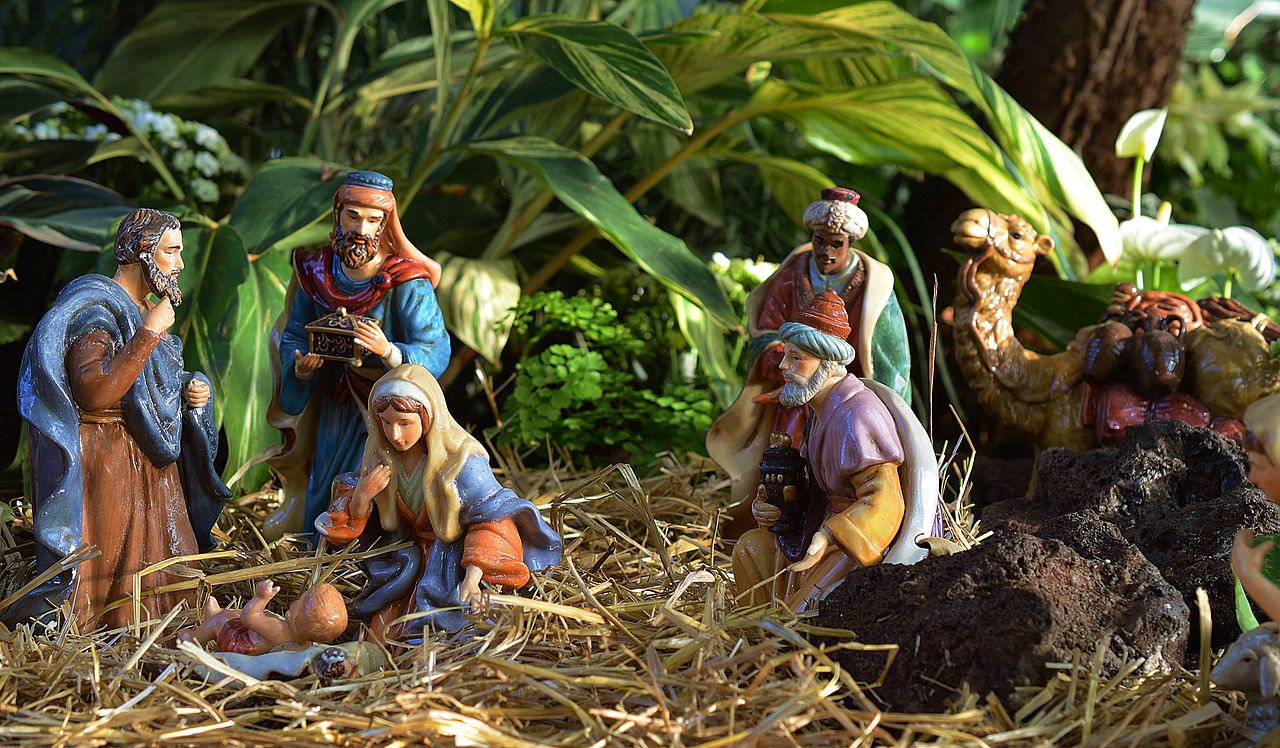
God has spent a long time teaching the world that he wants to be among us—to give us leadership, protection and certainty. And when his Son is born in Bethlehem, John tells us that the Word (who is God) takes on our flesh and ‘camps’ among us (John 1:14).

If your world doesn’t include God, this sounds foolish. But if you look at what God has been saying to us from early times, this is what you would expect to happen.

Among Christians, the coming of Jesus is great news. But the first Christmas is not all peace and joy. God coming among us raises questions, fears, and sometimes, hatred.

It’s the same now. The announcement that God has come to live among us is met with disbelief or distain. At best, it’s regarded as a nice myth to inspire or comfort us.

We need to look at what actually happens when God sends his Son among—us a baby. It helps us understand what’s going on in our own communities.

First, look what happens to Mary (Luke 1:26-38).

An angel arrives. He says God has come to show her great favour. But she is agitated—well beyond her comfort zone.

But she doesn’t need to be afraid. She will have a baby who will be Israel’s King, the world’s Saviour—nothing less than God’s Son.

She’s not married yet, but God says her baby will be a miracle. ‘… the power of the Most Hight will overshadow you’. No-one can work out how this happens. It’s not natural.

But this is what it’s like for God to be near. We’re not in charge! But then, we’re not being condemned either. And we’re not being set up to perform wonders of our own. God is not someone to compete with. But he is someone to co-operate with.

Mary’s reply gives us all something to say when God draws near. ‘May it be so to me as you have said’.

The world isn’t just nature—or things happening naturally. We have a Creator. He’s around! From the beginning, God has been revealing that him being near is normal. We should get used to it! It needs to be our new normal.

Second, see what some shepherds experience (Luke 2:8-14).

There’s no mistaking that an angel makes a night visit to some shepherds, and that his message is from God. He’s literally shining. The shepherds are terrified.

The way to deal with God being near is not to domesticate him but to listen to what he has to say. There’ll always be something unmanageable about this.

Here’s the message. The King that Israel has been taught to expect—their Messiah—has been born in their own town. This is good news for everyone. They get the details of where to find the baby.

Then there’s lots of noise. Many angels worship God and announce the peace God is bringing to those who share with Mary in receiving his favour.

This is what it means for God to be near. We can’t understand the logistics but we need the message. He’s announcing peace with himself, and the resources to be at peace with others.

It will never be us that makes this peace. It needs to be him—present and in charge.

Third, notice how agitated it makes King Herod. From his point of view, Jesus’ birth is a political event. He’s a rival (Matthew 2:1-18).

 ‘Wise men’ from East of Israel find out—somehow—that a Jewish King has been born. They call, understandably, at the palace, asking to see the new King.

Jesus can’t be hidden. He is world news. He attracts attention, and antagonism. Pilate does some research, gives directions to the visitors, and, deceptively, asks them to let him know what they find. He’s not interested in worship. He’s interested in cancelling Jesus.

Herod illustrates that taking authority to ourselves—as though God were not around—is dangerous.

Herod murders all Bethlehem’s children under two years of age. He needs to protect his tenuous kingdom—the peace he is trying to create by having people under his authority. This is the price the world pays for rejecting God coming to be among us.

So, here’s the new normal.

God has come among us—as a human being. He’s announced his way of peace with us. His way of going about this is not natural, or what we would do.

It’s not even what we like. We want God to leave us alone. And when we finally get an opportunity to do what we want with God, we kill him.

But then, Jesus reveals God—fully. While he is dying, he asks his Father to forgive those who are killing him (Luke 23:34).

The God who has come among us as a baby is still a human being—God, with human flesh. Except, now, raised from the dead, he’s been seated next to his Father, to superintend the peace he established.

This is certainly not natural. But it is God’s normal. And he is asking us to join him in the peace he makes. So, happy Christmas to you all. Just don’t expect it to be natural.

Saved from futility

‘What’s the use?’ We’ve probably heard that said, or said it ourselves. Nothing’s working and our time’s being wasted.

An old Greek myth tells the story of Sisyphus who is punished by being made to push a stone up a hill, only to have it roll down again when he nearly gets to the top. And he must do this forever! We now call a job that’s laborious and useless ‘sisyphean’.

That’s what life in this world is like—without God. Useless. And Christians have been saved from the futile ways we learn in this world (Ephesians 4:17-20).

In times past young believers were worshipping idols. And, of course, calling something a god when it can’t hear, think or act is futile. Nothing is going to happen by talking to it or offering it a bribe.

And the kind of life that grows from worshipping idols is also futile. There is nothing above us to lift us up. There is only a recycling of the mess we are already in.

Our own world dismisses giving reverence to God—any god. But we haven’t stopped worshipping something. We’ve been designed to look up and to be in awe of something. And people still say, ‘I just had to do that.’ It’s part of our being human to be compelled by something greater than ourselves.

If we don’t know the true God through his Son, Jesus Christ, we’ll install something in his place.

One writer (I’ve put a link to his article below) thinks self-worship is now the world’s fastest growing religion. This ‘religion’ or ideology teaches that each person’s own thinking, their emotions and choices, goals, values and creativity must determine everything else.

But then, he says, ‘When we try to be our own sources of truth, we slowly drive ourselves crazy. When we try to be our own sources of satisfaction, we become miserable wrecks. When we become our own standard of goodness and justice, we become obnoxiously self-righteous. When we seek self-glorification, we become more inglorious.’

Paul would say the same now as he did a long time ago. Without the true God, our understanding is darkened, not enlightened. It’s ignorant, not informed. It’s hard hearted, not sensitive.

It’s into this situation that God sends Jesus to live, and die, and rise again. He has come to lift us out of all this. That’s why Peter talks about being rescued from futility (1 Peter 1:8-19). Without him, we are slaves.

If you believe that the only things that are real are physical, it may seem strange to hear your way of life called futile. That’s why it’s important to look at the light God has sent into the world.

The story is told of a rebellious sailor who is lowered down into the empty hold of his ship as punishment. He has no light, no company. Only bread a water let down on a rope each day. Several days go by and the sailor defies the call to change his ways and return to the deck. So, the captain lowers a lamp down instead of the food.

Now, the sailor can see his surroundings—the filth and the vermin, and himself as part of it all. Quickly he asks to be pulled up out of his prison.

The way we are brought up, the way of life around us, seem normal. We can become accustomed to shallowness, to lies, and lust, and hollow laughter. Until, that is, we see Jesus Christ.

The only way to be freed from the futility of this world is for someone to pay for us—to be bought like a slave. And then be set free. That’s what ‘redeemed’ means in what Peter says.

God knows we are in the dark. He also knows we like being in the dark. We think it’s the only way to stay in control of our lives.

But then, God lets us see how bitter we have become—by letting us human beings kill his Son. He lets us see the meaning of love by his Son asking for us to be forgiven. He shows us there is a new way by raising his Son from death. We can begin to hope.

This is what it means to be ‘redeemed from the empty way of life handed down to you from your ancestors…with the precious blood of Christ’.

All that the world has when it doesn’t want God is cravings.

Interestingly, one of the world’s religions—Buddhism—is focused on shutting down desire because it is the source of all our unhappiness. But desire is part of being alive! We want things. That’s what gets us up in the morning. It’s what makes us work hard and take risks.

What makes desire a problem is that we do not have God as our Father. Nothing we get is ever enough. It wasn’t meant to be enough. Only God can be ‘enough’. Under him, our desires are governed. Without him, they become insatiable.

We try to have a full life by letting rip with whatever we want. But without God, we generate endless unrest. We find ourselves yearning for what isn’t ours, or boasting about what we’ve done (1 John 2:15-17). But it’s all a temporary ‘fix’. If it doesn’t come from the Father, it won’t last. It’s futile.

But then, what if we come to know God as our Father? Our passions are under his care. We listen to what he says. We copy the way of life lived by his Son. We have something that will last forever. It begins to feel solid—even in this world. It’s not futile. We’ve be rescued.

It doesn’t take much experience, and honesty, to recognise that something isn’t solid just because we can see it. Why not, every time to find yourself getting fond of this world, taking another look at Jesus, and what he has done. Ask why he took so much trouble to show us what’s real. Ask if you can afford to give your life for what is passing away.

You can hear my talk on this topic at https://www.youtube.com/watch?v=6kb4sbuJsus

Article: Self Worship is the world’s fastest growing religion; Thaddeus Williams

Friendship is all about other people

The story goes of a man coming home from a party saying, ‘I was surrounded by friends, but none of them were mine.’ Many people experience loneliness—including some who appear to be ‘the life of the party’.

These experiences demonstrate that loneliness isn’t mended with company. In the real world, having friends involves thinking—thinking about others.

Perhaps this is why many have experienced amazing community spirit when a catastrophe strikes—a flood or fire or accident. Everyone focusses on what needs to be done and forgets about themselves. They begin to ‘discover’ each other.

So, here’s the real issue. If we are only thinking of ourselves, there’s no real relationship going on. The other person is only ‘present’ to the extent that they are meeting a need of mine. They may be thinking the same. Neither of us are being real. We are like ghosts trying to hug each other.

A relationship with someone else is not just a matter of chemistry, or sex, or common interest. It involves love, and this means seeing who someone is and what they need—thinking about them and how we may be a part of their lives.

Paul tells his friends at Philippi to think of others and not just themselves, and consider others better than themselves.

That’s good advice but it’s easier said than done. Selfishness runs deep and takes us back to thinking about ourselves. That’s why Paul points to how Christ has lived among us (Philippians 2:1-11).

It would be worthwhile reading some Gospel stories about Jesus. People called him a friend of sinners (Luke 7:34). That’s what we need—not someone who expects high standards, conformity, or agreement but a friend who knows who we are, what we can become and what help we need.

And the first need we have is to be forgiven. We don’t merely need people we can follow, or who like us. We need a Saviour. We need Christ’s encouragement, comfort, tenderness and compassion.

We need to belong to a whole group of people participating in a love that’s bigger than all the funny things that go on between us people. We need to be God’s children—together.

Believe me, what we read here fixes the problem. We have a quality of life that doesn’t depend on our friends being friendly or us being perfect! There’s something different that happens among people who receive forgiveness from God, and receive the gift of his Holy Spirit.

Paul also says we need to put away selfish ambition or conceit (v. 3). In business circles, people talk about ‘networking’—finding relationships that may further their interests. But that’s not friendship. Friends aren’t concerned with their own interests but the interest of their friend.

In fact, we are called to consider others better than ourselves (v. 4). This is nothing to do with us being better or worse than others. We are talking about considering others better than ourselves.

So, is all of this just a game? Do we just act in a certain way because that will make other people feel happier with us? Hardly. That’s hypocrisy, and eventually, hypocrisy shows!

Here’s why it’s so important to know how Jesus thinks. He has been thinking about us—not himself. And because he is thinking about us, we can be freed from always focusing on ourselves. We can have the same thought in our minds as Jesus Christ.

How can this be? Stay with this! It might seem like I’m trying to crack a problem with a heavy thump of Bible, but thinking about ourselves doesn’t yield easily!

The way Jesus thinks starts with him being equal with God. He is God. But he doesn’t think this fact needs to be defended. He doesn’t need to protect his rights or have his identity acknowledged. Simply—he’s God. He knows it. And he acts accordingly.

Here’s what he does. He ‘made himself nothing’. That is, he pours out all that he is—for us.

The Son of God becomes one of us—a human being. As God, he is in charge. But, as a human being, he is told what to do. He’s become a servant.

Then, the job he is given is to show us who God is. So, he shows us the ‘comfort of his love’, his ‘tenderness and compassion’.  

It’s because we don’t know this that we have to protect ourselves. This is why we have to be surrounded with approving people. We’re not persuaded that God is friendly.

So, Jesus makes himself an offering for our sins. He’s already a servant, but he becomes a humble one and does the most despicable job you could ever take on. He’s nailed to a Roman cross. In our place.

This is the mind of Christ. He has come closer to us that we can come to ourselves. By being what he is—God, doing a human job—he’s shown us what it means to be human. He’s also shown us what it means to be God.

And then, Jesus is given the name above every name—that’s the name ‘Lord’, or God. There’s never been any risk of him losing his identity!

And there’s no risk of us losing our identity either when we think fondly about people around us—in just the same way we think about ourselves. If we’ve been united with Christ through faith, we have his encouragement, his tenderness and compassion.

So now, we are free to live, to love, to give and to share. It will seem risky. Sometimes, we may lose a friend rather than gain one. But we will always have Christ’s friendship.

Surely and certainly, we will discover the riches of relationships that flow from a reliable source—from no less than the God who made us to be like him.

It matters what you think

If you are asked, ‘What are you doing?’ you may say, ‘Just thinking.’ But we are never just thinking. What is going on in our heads—or not going on—affects what happens. Good thinking leads to good living.

It’s also true that if you are not thinking, someone else is doing it for you. And one day, you may resent giving your mind over to others—to musicians, playwrights, pressure groups or dictators.

But how does healthy thinking happen? I’m not trying to be an amateur psychologist here. I’m simply pointing out some directions we’ve been given to help us think well. They come from Paul, in his letter to the Philippians (4:4-9).

In human terms, if we are going to think well, we need to be inwardly happy—not depressed by our circumstances. We also need some confidence—so we are not embattled by rival opinions.

We need to be secure rather than anxious. And we also need lots of good options to choose from.

Many would agree with all this. Courses and therapies try to produce these states so that we can think and live well.

But Paul shows that these qualities arise from who God is, and from what Jesus Christ does. The world believes its enlightenment comes from our own history and experience. But we need to be enlightened by God speaking to us. Our thinking then becomes the way these unseen things become visible in the real world.

Let’s see how this works out.

First, Paul tells us to delight in the Lord—that is, the Lord Jesus Christ.

We are not just called to believe in Jesus Christ but enjoy him. A healthy mind starts by being happy, content, joyful—and Jesus Christ has given us good reason to do that.

Anyone who’s suffered with depression will tell you unhappiness is not healthy. It doesn’t lead to good decisions, or relationships or communities.

Because there’s a lot of trouble in the world, many would say we need to represent this in our attitudes and arts. For example, we have angry music, catastrophic news casts, dystopian novels and bizarre entertainment.

There’s lots in this world that’s going wrong. We can’t close our eyes to what’s painful or evil. Some things should make us speak up or try to change things. But if this is all we have, we tend to produce more despair than hope, more anger than action.

The Christian has a reason to be joyful. Jesus has died. Jesus has risen. Jesus is coming again. This is the framework for our thinking. The world has a Saviour. And we are part of what he is doing.

Notice, this joy is not something that happens to us. It’s something we decide. ‘Rejoice in the Lord, and again, I say, rejoice!’ We’re being called to embrace this. Some are waiting for their circumstances to change to give them some joy. God is giving us an opportunity to change our thinking. It could be that this will become the cause of a change in circumstance.

Paul describes himself doing this a little earlier in his letter. Things haven’t worked out well with his work. People are opposing him, competing with him. But he reckons that Jesus is still being made known. This makes him glad. Then he says, ‘And I will rejoice!’ (1:18).

This attitude helps him to think of things that will give joy to others (2:27-28).

We all need to find this source of inward delight. Is this what you have? Is this something you’ve been missing out on? Have circumstances been framing your thinking? What do you have that secures your happiness?

Think again of what you have in Jesus Christ—the forgiveness of sins, a place in God’s favour and purpose, a Father to approach and a goal to share. Set your mind on these things and see if life changes!

Second, our core confidence is that the Lord is near. So, we can be reasonable or gentle towards others.  

In practical terms, if we know where we are coming from, we don’t need to get rattled by people with opposing views. If we’re sure of our ground, we don’t need to shout.

This is a big ask—given the frustrating and frightening situations and people we meet. But Paul has a reason: ‘The Lord is near.’ He could mean that Jesus is coming back again to put everything right. Or he could mean Jesus is here now. Both are true.

Jesus has confronted this world’s corruption and rebellion head on. He let the world kill him. And he did it for us. And God raised him from the dead and put him in charge of everything. And now, he is near. The situations we are facing are being managed by him and he has us in the middle of it for some purpose.

People say you have to be strong when confronted by something really difficult. That’s true. But the Christian is saying that someone else strong is near—Jesus Christ. That’s our strength.

Many Christians can tell us about their experience of going through difficulty and finding Jesus Christ more real and powerful than they ever did before. Their difficulty made Jesus Christ more enjoyable—not less. Their thinking changed. And they changed. And things around them started changing.

Third, we need to call on God for what we need—and not let them run on into anxiety.

Think about this. Something is wrong, threatening, damaging or impossible to manage. Isn’t fright and flight an appropriate response?

In lots of situations, putting ourselves out of harm’s way is the best option. But that’s not always possible. And then, there’s lots of reasons why we feel anxiety. We can’t always switch these feelings off with some positive thinking.

It helps a lot if we know there’s something we can do. We can pray.

Now, here’s something very interesting. When we learn to pray rather than give way to panic, God’s peace will be like a wall around us. Notice, he’s not saying we feel peaceful. He’s saying the peace of God is around us.

Our God is the ‘God of peace’ (v. 9). This is who he is. He isn’t flustered, altered or surprised by anything. He has decided how things will work out best and that is the plan he’s working on. It’s this peace—a lot bigger than what will fit in our heads—that will keep our hearts and minds.

God doesn’t make us clever enough to cope. Our thinking needs to be going on inside his thinking. There are some things we just can’t work out. We weren’t meant to. We are meant to pray. And God will keep our hearts and minds in Jesus Christ. That is, he won’t explain the complexities of everything. He will keep us trusting his Son.

That’s where we can find help for our mental health.

Fourth, we have a list of good things to focus on.        

There are lots of things that are worthy of attention—things that are true, worthy, right, pure, lovely, admirable. The long list of similar words suggests that we won’t be stuck for things to dwell on.

There’s a Bible full of good things to read. But the list suggests people and events we are seeing, hearing, studying or sharing in. There are wonderful examples in people around us who do worthy things. We can seek out their company. Or we can read their stories. We can learn from what they discover and be encouraged

Of course, there’s plenty of things we can’t avoid seeing and hearing that are false, shameful, impure or ugly.  We need to grieve over them. We may have to deal with them.

Again, the Bible has many sad and gruesome stories. However, if you read the whole story, you can see that they are told from the perspective of a God who deals with evil and promises good.

These impure, things don’t need to frame our thinking. So, we don’t need to feed on them and let them fester in our heads. We need to hate them and put something better in their place (Jude 22).

We need a mind full of good things if we are going to form proper assessments, make good choices and act well. And we need to seek them out, delight in them and let them shape our decisions.

Elsewhere, Paul tell us that God transforms us by the renewal of our minds (Romans 12:2). This happens by thinking that starts with what God has done, and looks at everything else from that point of view.

I hope these pointers help us on the way to some good thinking.

1—The real world

If you’re a Christian, you’ll know that life is not just drifting. There are things to know, decisions to make and battles to fight. In the life we have been given, we will need to be strong.

Paul writes about this at the end of his letter to the Ephesians (6:10-18). He has described God bringing us to himself, sending his Son to make it happen, and told us how we are to live. Now, we need to take up the strength he will give us through Jesus Christ.

And he says we will need to stand in an ‘evil day’. There’s a battle on—something particularly difficult and threatening.

When anything goes wrong, our immediate instinct is to blame someone, protect ourselves or attack someone. But if we do this, we are not seeing what’s really going on.

In the real world—as God reveals it to us, our battle is not with people we can see. It’s against ‘powers of this dark world’—headed up by the devil or Satan. And although they are powers of this world, they are operating in ‘the heavenly realms’.

We need to know this space well, because it is where our struggles are happening.

It sounds strange to hear of evil in heavenly places! But it will help if we notice the other things that are happening in this area.

It’s here God blesses us with the full blessing of being in Christ. It’s here we find out we are chosen, called sons and daughters of God, forgiven through Christ’s death, and told many things about the future we will share (1:3-10). It’s the space where we know and relate to him.

Then, it’s the place where Christ is reigning—seated beside God (1:20). In other words, Christ is totally in control of the place where we relate to God. We should be enormously grateful for this.

But there’s more. We have been raised up from our spiritual death to sit with Christ in God’s presence—in ‘heavenly places’ (2:6).  It’s the space where we enjoy his friendship.

But then, this space is also where God displays the greatness of his work in us for others to see—the rulers and authorities in heavenly places (3:10). Who are these other creatures inhabiting the space we share with God?

Our passage now makes this clear. They are ‘the spiritual forces of evil in the heavenly realms’ (6:12).

So ‘heavenly places’ is not heaven. Satan can’t be there. And we are not in heaven yet. But we are in these heavenly realms and so is Satan. In other words, he and his hordes come to mess with our relationship with God.

It turns out that ‘the heavenlies’ are the arena we are living in now! It’s the way things are. The real battle in life is about relating to God. If you are ignoring ‘the heavenlies’ you’re not dealing with your God, or with your real enemy. You’re not really ready to live.

Having to battle in this space is how things have been from the beginning.

God puts Adam and Eve in his Garden of Eden—the space in which they can relate to him. Everything is wonderful and there is unfettered companionship between God and his creatures. Satan enters this space. He sows doubt about who God is. He suggests to Eve and Adam that they should decide things for themselves.

In very short time, he has moved them over to his side (Genesis 3:1-6). They eat the forbidden fruit and immediately are ashamed. Satan has others with him now who are experiencing God as an enemy rather than as a friend.

Our first ‘parents’ got us all involved in Satan’s plan. That’s the battle that’s going on.

If you think this is just something ‘spiritual’—in the sense of being unreal—think again. The battle is being worked out in a very domestic way.

In Eden, Adam and Eve immediately start blaming others. They don’t deal with the real problem. They start fighting each other. And it goes on. Their oldest boy kills his younger brother.

Notice, they have given opportunity to the devil by not accepting that their enemy is Satan. The blame game goes on amongst us humans and the devil gets free points!

Everyone has this problem. The world tries to deal with its own community angers, but, all too often, it uses anger to try and resolve anger.

If there’s no one to resolve our dispute with God, our social battles become messy and complex. We are surrounded with hostilities and power plays. While we think the problems are merely human, and solvable, we are living in ‘fairy land’!

Paul has already given us some idea of how anger can play into Satan’s hands. He says, ‘be angry, but do not sin; do not let the sun go down on your anger, and give no opportunity to the devil’ (4:26-27).

There are some things that ought to make us angry—enough to make us speak up, or act. But anger can take us over. It can move from being right, to being wrong—in a flash! Satan will have us being furious with each other while we don’t even admit he exists—and he’s laughing.

Given this is the battle we are in, Paul will tell us how to be strong in the Lord. We are going to need all of who he is and what he has done. We are going to need to take it up and to put it on. But more of this in the next articles.

2—The Real Breakthrough

How come we need Jesus Christ to be strong and ready to live?

The answer is partly because of the battle that’s going on. We’re living in God’s world, but there’s an undercurrent that says you can stay in charge by assuming people and the environment are all there is.

I’ve shown what can happen when we think we’re only dealing with what we can see. Life can become a cycle of blame shifting and discontent. The anger we see and feel gets out of control.

In fact, our problem is Satan—because he’s messed with us relating to God.

It’s Jesus who makes the real breakthrough.  

So, let’s look at how he—in this world—goes about being the one who is strong. We need to know this, and know him, if we are going to trust him with our life.

We may have the impression that Jesus is always being ’nice’ to people, but if you read the story of his life—the four Gospels—it’s clear that he’s not just someone who responds to need. He takes the initiative to make sure we deal with life’s real issues—not just circumstances.

Jesus doesn’t begin with us! His first job is to go to a desert, alone, and there wrestle with Satan—for over a month (Luke 4:1).

In the place where the first man—Adam—gets everything wrong, this second Man gets it right. He knows the real enemy. And he knows that his only defence against Satan’s cunning is what God says. He sends his enemy off unheeded! And he begins his ministry in the power of the Holy Spirit (Luke 4:13-14). Notice, he is strong—in his Father God.

He continues by showing he is stronger than the devil (Matthew 12:28-29). He isn’t just healing people. He is pushing back against the inroads of the devil.

When it comes time for Jesus to die, he says, ‘Now is the time for judgment on this world; now the prince of this world will be driven out’ (John 12:31). Notice, he’s called Satan this world’s prince. Drifting along with the world isn’t all it seems! There’s unseen powers behind what we are experiencing.

Jesus says his death will throw Satan down—unable to achieve his goals anymore (John 14:30). And as he dies, he says, ‘It is finished’ (John 19:30).

But now we come to why we can be ‘strong in the Lord’.

God raises Jesus—our Saviour—from death. He does this to demonstrate his great power, not just in Jesus, but for us (1:18-23).

Our collaboration with the enemy, our sharing of his rebellion and God’s judgement on it, have all been worn by a loving Saviour. We have forgiveness through his blood. And God raises him from the dead to show that this rebellion doesn’t have a future!

Satan no longer has us on his team. By trusting Christ, you can be strong and ready to live.

Now, anger with one another doesn’t need to rule us. We will deal with antagonisms, but they won’t be the main game. Rather, we will wrestle against ‘spiritual forces of evil in the heavenly realms’—in the space God has created for us to relate to him. ‘Resist the devil and he will flee from you’ (James 4:7). There lots of ways this happens and Paul is going to show us how to ‘take up’ and ‘put on’ this strength of Jesus Christ.

3—Being true really matters

This series of articles all have to do with being ready to live, and ready to live in the real world. We’ve seen that this arena is not just the one we can see. There are ‘heavenly places’ where we relate to God and know his blessing. It’s a place where Christ reigns. And it’s also a place where Satan works with hateful constancy.

Paul says we need to be strong and stand our ground (Ephesians 6:10-13). And our first line of defence is truth.

An editorial in this morning’s paper claims that lies have become a way of public life in Australia. It says that much of what we hear is carefully crafted (it’s now a major industry), not to inform, but to exert power.

But lies are not the way to win in the real world we are in. We need truth!

Notice that it’s not a truth that originates from us. Paul uses imagery that shows we pick it up and put it on. What is this truth? Paul doesn’t leave us guessing.

Truth is Jesus himself (4:20-21). He’s come to our world and said what is true. But he’s also lived it. His goodness is real. And his love is real. And it has encompassed us, and saved us. Where truth is concerned, we have to start with him.

It would be worthwhile reading one of the Gospels through, and ask if this man Jesus is true. Paul is saying, we’ve heard about him, we’re surrounded by him—heard him speak in a way. In this way, we’ve discovered that the truth is in Jesus.

Our Lord towers over the make-believe, the ideologies, the excuses and straight out lies that make up so much of what we see and hear around us. Many have given up believing there is such a thing as ‘truth’. So, there’s nothing that can tie us together as a community. Nothing that can lift us out of the world we’ve imagined.

Compare this with Jesus. He challenges people to prove him to be false—a bold public claim. And he calls the devil the father of liars (John 8:44-47). He tells Pilate, in court, that he has come into the world to reveal the truth and that everyone who is true will come to him (John 18:37).

In the process, Jesus exposes us all as sinners, but he loves us and brings us to God. That’s not only the truth of Christ. It’s now the truth about us as well (John 3:20-21).

The Lord knows we don’t have the ‘stomach’ for this battle—in this case, the battle to live truly. Prophecies have told us how God clothes himself in righteousness (a breastplate) and salvation (a helmet), and deals with the godlessness himself (Isaiah 59:16-20). He intervenes.

In fact, the Lord comes to us as our King, wearing righteousness as a belt and faithfulness (or truth) around his waist (Isaiah 11:1-5). In other words, God must take up the fight or we are lost. And he sends Jesus to do the job, wearing righteousness and truth.

It’s ‘no secret that this intervention is done by Jesus on his cross (see Isaiah 53:12). It’s here that he goes to war with Satan and disables the apparatus—the lies and the accusations—that Satan uses against us (Colossians 2:15).

So, here’s an end to our self-importance and self-justification. These are the things that stop us speaking the truth to each other. They make us unreal. They lead to conflict or withdrawal from meaningful relationships. But now, our inclination to massage the truth, to make it palatable to our ego, or to further our ambition, is gone.

We can acknowledge we are unworthy sinners whom God has loved and for whom Jesus has died. In the light of this, we can speak the truth to each other (4:15, 25). Because we’ve lost our need to be the one who is right, we can see and speak about things as they are.

We’re free to say we were wrong. We can enjoy what others are doing. We can disagree without ceasing to love. We can investigate something that is new. We are free—in the truth!

Our truth telling doesn’t need to be brutal—exposure for the sake of being factual. It comes from the perspective of Christ being Lord. It’s about what will build up another person, not what will tear them down (Colossians 4:5-6). It’s about what will heal a community, not what will serve a party interest.

It’s important to actually do this! Apart from Christ, our life is a lie, and Satan will use this to his own advantage. But if we receive Christ as our truth, and stand in him, and relate to others by him, Satan is foiled. And wonderfully, a community is born where people live for each other rather than for themselves.

We’re doing something real, in the real world—and something that’s eternal.

4—Being right really matters

All of us want to be ‘right’. It’s how we are made (Ecclesiastes 7:29) and we feel ill at ease if we can’t justify our actions.

But, in the real world, we are actually living before God. So, we need to be right in his eyes—that’s what righteousness means. Without this, we fall into Satan’s hands.

Some have professed to believe in Christ but not been careful how they live, and Satan has brought them low. So, Paul tells us we need to be protected by righteousness (Ephesians 6:14). We need to put it on!

This sounds strange, but, thankfully, he’s already told us what he means earlier in his letter. We’ll just look at three ways in which this happens.

First, we need to know that a Christian is something God makes.

Paul says there’s a new ‘self’ to put on—created by God, and to be ‘like God in true righteousness and holiness’ (4:24). He’s talking about things we need to do, like being truthful and not getting angry, but our new ‘self’ needs a ‘Made by God’ label on it.

We become Christians because of God alone—a work of grace.  And he creates us ‘in Christ Jesus to do good works, which God prepared in advance for us to do’ (2:8-10).

Being God’s new creation means we’re already reconciled to God and that he doesn’t count our sins against us any more (2 Corinthians 5:17-19). This is not just a book-keeping entry in heaven. It’s a relationship. A Christian is someone moved by God’s love (v. 14). When it comes to being a Christian, this is where we are always beginning.

Every day, we find our righteousness is lacking—sometimes, badly. But Christ’s blood keeps on cleansing us (1 John 1:9). Our task is to keep clean what God makes clean, not tidy up yesterday’s mess!

Now, we need to be what we are—to act consistently with our new identity as God’s creation. If we forget who we are, we’ve got nothing to be!

The righteous acts we do are basically gratefulness for God’s goodness to us. Anything we do outside this would be making something of ourselves, and that’s not righteousness! What impresses God and deters Satan must be made by God (Philippians 2:13).

In another letter, Paul says we have put on our new self—that’s what happens when we become a Christian. And now we are being renewed in knowledge after the image of our Creator (Colossians 3:10). This is what we must talk about next. But both our beginning and continuing are what God creates.

Second, we need to think in this new way.

Paul calls this being ‘renewed in the spirit of your minds’ (4:23). What God has made is alive and needs to grow. What we’ve received needs to work its way through all of our thinking (Romans 12:1-2).

There’s a lot of talk these days about what is right and wrong. But, in many cases, we are not being asked to think, but to agree. God doesn’t want ‘Yes’ people. He wants us to understand what he says, love what he wants, and think of ways to share in his working.

Our teacher in getting this new mind is Jesus (4:20-21). We can’t afford to trust our feelings or majority opinion. Our understanding of what is right needs to come from him—a gracious Saviour.

But then, he is also the material we learn. He is what is true, and he is what we need to be. It’s his purity, and it’s his kindness that are powerful to help us change.

You could say, we are in his space! He is not just the best teacher but he also the ideal environment for learning. For example, we are to ‘be kind to one another, forgiving one another, as God in Christ forgave you’ (4:32).

Third, we need to change how we live.

A physiotherapist told me once, ‘the body is a cheat’. It finds the way of least effort to do what it needs to—even when it’s damaging itself. The same is true with behaviour. The way we’ve always done things, or what comes naturally, seem preferable to change. But then, no change may mean death! We need to think about what we’re doing.

There are things to ‘put off’. We used to do whatever we felt like—without God, without shame and without limits (4:22). Now we know these things don’t set us free. They deceive and corrupt us. Where Satan is concerned, we’re letting him walk all over us, not standing against him. Sometimes, we just have to say ‘No!’

And there are things to ‘put on’ (4:24), like being self-sufficient and generous (4:28). We need to let the Holy Spirit fill up all our dark spaces with helpful conversation and kindness (4:29-31).

Paul gives us a list of ways in which we can imitate the God who is giving us new life (5:1-18). He tells us to walk carefully, to make good use of time because the days are evil and to understand what the will of the Lord is.  All this needs some enthusiasm and persistence. And we’ll need the company of our Christian friends (5:19-21).

If being righteous sounds boring and conservative, or impossible, think again. You’re a human being doing exactly what you were created to do. You’re enjoying the purpose God has in saving you. And God is treating you with great dignity by expecting something from you. It’s the way to be strong, and the only way to be protected from our enemy.