Christ is born. Good news for everyone

I don’t’ need to tell you that’s it’s Christmas time. That news is everywhere. But the world can’t tell you why it’s a time for joy—or even being happy or merry. Even at the first Christmas, no-one could have told you it was a time to be happy, unless there were some angels around to help.

All of us need some help to move beyond trying to keep ourselves happy and find the joy that God is waiting to give us.

Christians don’t need to do things to make them happy. Whole industries are devoted to that. Of course, we all hope for happiness—for ourselves and others, but this is very dependent on circumstances. And it can often be shallow—a cosmetic on the face of sadness. Sometimes, it relies on blocking out the unpleasant parts of life.

But joy is different. It’s an important part of life. It’s not just for the ‘fun bits’. It’s the motive we need to relate warmly, and the enthusiasm we need to get things done. It’s the exuberance we need to live well—an inner confidence, and hope for a future that’s sure. Everyone has this need, but especially those who believe in God and his Son.

Because Christians start with the wonderful gift of Christ to our world, they start with joy, continue with joy—sometimes through pain, and they end with joy. It’s a quality made in heaven, and delivered.

Joy starts with God. Just think about what we know about him for a moment. He knows his creation is good. He loves what he’s made. He’s planned every detail of what he will do to fix our mess. And everything is happening in the time frame he has in mind.

His joy isn’t ignoring our pain. He understands sadness better than any of us. He’s acquainted with everything that’s happening, and grieves over it. He knows how hard it is to change things. And he doesn’t rely on phony fixes. But he knows what he will do to restore joy for us.

This is because everything God does for us focusses on one great event—the coming of his Son into our world—his anointed King. Our joy is dependent on him. Totally!

Luke tells us about three occasions of joy when Jesus comes into our world—for Zechariah, for Mary, and for a group of shepherds.

In each case, an angel is sent to get things moving. In each case, there’s a problem to solve. And, in each case, the joy is offered to everyone. Here’s what we can learn from them.

Zechariah and his wife are old but an angel comes to him and announces that he and his wife will have a son. We’ll get to know him later as John the Baptist. And the angel says, ‘You will have joy and gladness. And many will rejoice at his birth.’[i]

Well, John is not so sure. He and his wife are past having children. And here’s the problem. He may be righteous. He’s performing his once in a lifetime task—burning incense and praying for Israel in the temple’s holy place. But still, he’s living by what’s possible, not by God’s word of promise.

The Old Testament has closed with a guarantee that righteousness will again rise like the sun and shine on his people. And a new Elijah will prepare his people for this day. And Zechariah’s son will be this new Elijah. But Zechariah is focused on problems, not God’s promise!

Being a good man isn’t enough! Anything that’s ‘us’ isn’t enough. God wants us to be expecting something from him. That’s where joy comes from, and how it’s sustained.

Well, God gives him a nine-month course on joy! And while the impossible happens, he’s got time to think.

So, John the Baptist is born, Zechariah regains his voice, and he tells us what joy is and where it comes from. I’ll leave you to read his exuberant praise. Sufficient to say, it all depends on God sending us his Son. God has not given up on his creation, or forgotten his promises to Israel. That’s why there’s always a reason for joy.

And then, an angel is sent to Mary. She is also told about a birth. Her son will be Israel’s Messiah. It’s hard to comprehend the explosion that must go on in her mind. She’s young. She’s betrothed to Joseph. But she also knows the hope of Israel, that God’s king will come to save his people.

Her question is not ‘can this happen?’ but ‘how will this happen’. She’s devout and circumspect, betrothed to Joseph but not married. She asks a good question. The angel, delicately, tells her that the Holy Spirit will ‘overshadow’ her. The Father will be God—no less.

She’s heard enough, and says, ‘Let it be so to me according to your word.’ Possibility is not the question. She’s focused on God’s word, not her worries.

How she feels about this is revealed later. But we know that she visits her auntie Elizabeth who is already pregnant with John. It will be three months before he is born, but Elizabeth says the baby leaps in her womb for joy. As we find out later, John the Baptist is filled with the Spirit from his birth. It’s as though he can’t wait to introduce the Messiah to Israel!

And Elizabeth has learned what is important in this life. She says to Mary, ‘Blessed is she who believed that there would be a fulfillment of what had been spoken to her by the Lord.’[ii]

But now, when Jesus is born, Mary tells us what’s in her heart. Let her tell us what’s important in life.[iii]

‘My soul magnifies the Lord, and my spirit rejoices in God my Saviour.’ And, ‘…he who is mighty has done great things for me’. She’s insignificant and unworthy but receives mercy—mercy that will come to many. There’s the abiding reason for joy for all of us!

Once again, an angel is sent. This time, to shepherds.

Jesus has been born. The Son of God is in our world. But God can’t rely on us responding appropriately! It’s going to take time to get us to believe this, and for him to get his joy into our minds and hearts.

So, God sends his angel to some shepherds. They’re overwhelmed, and scared. But these shepherds need to get used to God being in charge of what we think is our space! The angel’s message is one ‘of great joy which will be for all the people.’

But notice the wording. ‘I bring you good news.’ ‘To you is born…a Saviour.’ And ‘This will be the sign for you.’ The shepherds aren’t listening to a news item. This is not of general interest. This joy comes to us because God is speaking to us. It’s for ‘all the people’. I am being addressed too!

And now, the shepherds are given something to do. They need to see the connection between the unseen world of God speaking by this angel, and the working out of this in life. They will find this baby in David’s city—Bethlehem, in a feed trough.

Then, God sends a whole choir of angels to show us all how to respond to this great gift. Give glory to God! All of it. And receive the peace! All of it. God is generous in love and ready to act.

Looking for one born to be King in a feed trough is unusual. And, of course, only shepherds would know how to scout around Bethlehem among the sheep shelters and ask their mates if they’ve heard of a baby being born.

But notice what they say. ‘Let’s go, and see!’ And they hurry. And they discover that all they’ve been told is true! And their message goes viral. The unseen world of angels has broken into the world they know.

The coming of joy is no different for us. God has revealed himself in our messy and monotonous world. And he calls us to come and see these things that he has done among us. And to believe the things he will do among us. And to rejoice.

I’d like to follow this up by writing about two other ways in which Jesus comes to us—to bring us joy.


[i] Luke 1:14

[ii] Luke 1:45

[iii] Luke 1:46-55

The shape and feel of life when God is Father

When Jesus comes into our world, there’s something very dear to his heart that he wants to share. He says the kingdom of God is at hand. Jesus will ensure that the world will be shaped as God wants it to be. And he begins to explain what this kingdom will be like. But there’s something else.

Jesus is God’s beloved Son. He’s come to express his Father’s love for our world. And he wants us to know the Father as our Father in heaven.

We see all this happening in his Sermon on the Mount.[i] Jesus tells us how we are to live under his Father’s reign. But he also tells us that everything will flow from us knowing his Father as our Father. The phrase ‘your Father in heaven’ occurs 15 times in just three chapters.

Every matter that Jesus raises is related to us knowing or receiving something from God as our Father.

Here are the life issues that Jesus raises in this Sermon, and, in each case, the way they relate to our knowing our Father.

First, Jesus commends certain attitudes—like being poor in spirit or meek or being hungry for righteousness. There’s eight in all.  

And then he tells us to let our light shine in the world—presumably by acting according to these attitudes. But when the world sees these actions, they give glory to ‘your Father in heaven’.

Why should glory go to the Father when we have done the deeds? Clearly, because there’s no way we can live with these attitudes unless the Father is teaching us and present with us. That’s why people, seeing us, want to glorify our Father in heaven.

The attitudes Jesus commends may not be things we would put in a job application. For example, being poor in spirit doesn’t sound like someone who’ll get things done!

But then, people who know God as their Father, lose the egotism and power-seeking natural to this world. They grow in naturalness and transparency and usefulness. And this declares the majesty and faithful love of the Father to those around us.

I hope this is the longing of us all. We’ve not been created to muddle aimlessly, or live by our own resources. We’ve been made to know God—as his sons and daughters, and to let our life develop in the warmth of relating to him.

I’ll say a little more about these attitudes at the end of this article.

Second, Jesus talks about keeping the law—the law that Jews prided themselves on keeping. He shows what several of the commands really mean.

But then, he says we should let our favours shine on good people and bad people alike. This, effectively, is keeping the whole law.[ii] It’s what ‘your Father in heaven’ does. And we are to be perfect, just as ‘your Father in heaven’ is perfect. As Paul later tells us, ’Be imitators of God as beloved children’.[iii] And, of course, if we are going to imitate him as Father, we will first need to know him as Father.

Third, Jesus talks about worship. Jews at the time think prayers, charity and fasting are the important things to do. So, they do them—publicly! They want to get some credit for doing the right things.

Jesus says, try to make the things you do for God as inconspicuous as possible. Then you will be rewarded by ‘your Father in heaven’.

We’ll never understand ourselves or our world until we understand how dependent we all are on approval. If we can’t get it from God, we’ll play to our local earthly audience. Our need to know the warmth of our Father’s approval is profound and continual. We need to see ourselves as playing to a one-person audience—the one we have come to see as our gracious Father.

Fourth, Jesus talks about our treasures. ‘Where your treasure is, there will your heart be also’.

He wants us to treasure God’s kingdom. He wants us to pray to ‘our Father in heaven’ and ask for his kingdom to come. And then to ask for him to forgive us, provide for us, and keep us.

So, we need to trust God with all our needs, and not be anxious. We’ll never be free enough to care about God’s kingdom if we’re preoccupied with what we lack. He says ‘your heavenly Father’ feeds birds. How much more us!

Being preoccupied with material needs is what people do when they have no God. They are spiritual orphans. But Jesus insists that ‘your Father in heaven’ knows about everything you need. And ‘Your Father in heaven will give good things to those who ask him’.

Fifth, Jesus talks about doing the will of ‘his Father in heaven’. This is what we need to do to enter the kingdom.

But why does he change from talking about our Father, to his Father?

Perhaps it’s because he knows that when it comes to obedience—in everything, he is the only one who will do this.

None of the apostles are living by the Sermon on the Mount. Not yet. They don’t even have the attitudes Jesus commends at the beginning of his sermon.

For example, Peter won’t be meek when he brags about being better than the other apostles. Jesus nick-names John and James ‘sons of thunder’ which doesn’t sound like being peace-makers, or merciful.

Something needs to happen before the disciples will understand this Sermon on the Mount. They will need to know the Father. And everything Jesus says and does will be needed to bring that about.

As we follow the story of Jesus in the Gospels, we see that he is the one person among us all who lives by the Sermon on the Mount.

He knows the world works by the blessings God gives. So, as a man among us, he is ‘poor in spirit’—humble about what he can and can’t do.

He knows the sorry state of our world, and grieves over it. He is meek and lowly and serves his disciples, and many others as well. He thirsts for righteousness and knows judgement will fall on everyone who ignores his Father.

But he doesn’t want that to happen. He’s full of mercy. His heart is pure, not distracted. He, single-handedly, will make peace.

And he will be persecuted for all his faithfulness to his Father. But by this very persecution, he will bring many of us to ‘our Father in heaven’.

We could say that he is the one realist in all of creation. He’s not expecting something from us that we can’t produce. He’s not relying on the world to fulfill his agenda. He’s descending upon his duties as one who knows the Father.

That’s why he can endure the world that hates his Father, but still call it what it is. And he can also ‘see’ his Father’s love for this world—and express it.

It’s this God and Father of Jesus that we need to know as ‘our Father in heaven’.

Can you bring yourself to trust him? The reality is that we can’t. But the Father is drawing us to himself.[iv] We need to be hearing what he says to us through his Son. We need to be receiving what he provides.

We’ll continue this series by seeing what Jesus says about his Father—in Matthew’s Gospel, and then in John’s Gospel. And finally, see how the apostles teach us to live before our Father in heaven.


[i] Matt. 5—7

[ii] Matt. 7:12

[iii] Eph. 5:1

[iv] John 6:44


The battle for the world when God is Father

Calling God our Father raises a variety of images in our minds. But the image generally preferred in our Christian prayers and songs is probably of God being welcoming, generous in love and ready to meet our needs.

There’s good reason for this because Jesus says our Father in heaven is attentive to us and ready to help.

It’s surprising, then, to see how Jesus (in Matthew’s Gospel) often links God being Father with the coming of his kingdom or rule. It becomes clear that the two belong together.

This is certainly true in the Sermon on the Mount, and now, it continues.

Disciples are spreading news of the kingdom around Galilee. And although Jesus says they will be like sheep among wolves, they need not be worried about how to defend themselves. The Spirit of their Father will show them what to say when the time comes.[i] The Father will meet their needs. And when the battle is over, Jesus will acknowledge his disciples before his Father in heaven.[ii]

Jesus Christ isn’t training his disciples to be heroes, or wimps. He’s teaching them to love and to labour for the kingdom, but also to trust their Father, as Jesus himself does, and to drink deeply from his strength and graciousness.

So, as the disciples continue their kingdom ministry, opposition grows. Sometimes there’s good news.[iii] But there’s also bad news[iv]. Many reject the message of the kingdom. They’ve thought God would ‘dance to their tune’, in the way children expect their playmates to join their game and play by their rules.

And it’s in this setting that Jesus prays a simple prayer of thanks to his Father.[v] And he lets us listen in.

This is enormously helpful for us because the prayer reveals how the Father works. And it shows us how to focus on the kingdom and not be diverted by opposition.

Here’s the prayer.

Jesus gives thanks—I thank you Father, Lord of heaven and earth.

He’s thankful because—you have hidden these things from the wise and prudent and revealed them to little children; yes Father, for such was your gracious will.

He explains that—All things have been handed over to me by my Father, and no one knows the Son except the Father, and no one knows the Father except the Son and anyone to whom the Son chooses to reveal him.

Here’s two things that are clear.

First, whatever turbulence is being caused by kingdom ministry, nothing is getting out of hand. The Father is Lord of heaven and earth, and Jesus is deeply grateful.

In fact, he’s full of joy. Luke’s account of the same prayer tells us he’s rejoicing in the Holy Spirit.[vi] That would be something to watch—Father, Son and Spirit, watching and delighting in the progress of the kingdom!

If the Father has complete authority—everywhere, he’s not running a democracy! There’s no balance of powers. And there’s no doubt about outcomes. The Father is managing the planet and its peoples.

But he’s using his authority so that arrogant people who don’t want God around can’t get their hands on what’s happening, because they can’t see it!

On the other hand, the Father is revealing his secret to ‘little children’—people who know their need for grace, and their unworthiness to be significant. They know they need God. They are being awakened. They are seeing who Jesus is.[vii] They are recognising that God, the Father, has come to help them and to be with them.

All this is God’s gracious will. He’s using his authority in the interests of love. There’s nothing sinister or unjust anywhere. Everything he’s doing is with a view to his kindness and mercy taking the upper hand. This is how the kingdom grows—one person at a time—by people discovering the identity of the Son and being grateful to the Father for his grace.

We need to join Jesus in this delight. He’s not getting engrossed by our little gains and losses. In fact, he’s just told his disciples not to delight in their mission successes but in their names being written in heaven.[viii]

It’s easy to become obsessed with how well we are going and forget that the battle is always wider and deeper and longer than we can grasp. And it’s easy to imagine that we are the important player in what’s going on!

So, we need to begin all our responsibilities where Jesus does—with our hearts happy in our Father—happy that he is Lord of heaven and earth.

Second, the Father has entrusted everything to the Son. He’s wholly responsible for everything God plans to do. But at the heart of this commissioning is a relationship.

Jesus is not thinking of a list of projects. He thinking about the Father knowing him—the only one who does. And he’s thinking about him knowing his Father—again, the only one who does.

It’s not simple to have a relationship like this. We tend to relate to others with an image of who we are. But with God—Father and Son—there’s nothing to hide and everything to enjoy.

Such knowing can only be the knowing of love—persons wholly focused on the other.

We can understand why Jesus needs substantial time with his Father in prayer. No-one anywhere else understands him! But then, he wants every word and act of his to reflect the Father—so that people seeing him will see the Father.

It’s out of this relationship that Jesus exercises his authority—revealing the Father to those he chooses.

If we read the Gospels, we can see Jesus doing just this. He encounters a vast array of people. He seeks to know each one as they are. And he wants them to know that they are known by the Father in the same way he is known.

In everyday life, if someone tries to be ‘their own person’ without regard to parents, mentors and friends, they tend to become unreal, and probably, deeply lonely. We all need personal relationships that are deep and satisfying. But we are created for more than that. We need to know God—as our Father. We need to know we are known by him.

So, it’s important for us to know that the Father’s kingdom is happening because of a relationship. Jesus calls us all to be known by the Father, and to know the Father.

And now, Jesus speaks directly to us in our need.

Come to me, all who labour and are heavy laden, and I will give you rest.

There’s a context for what Jesus says here. Pharisees are manipulating God’s law to their own advantage, gaining attention by making out to keep it, and accumulating power by being able to teach it. Living in this environment is wearisome!

They, and we, all need to turn from a religion that starts with us. Any religion or ideology that starts with what we do rather than with the Father who has sent his Son will always be a burden too hard to bear.

We can never steer our way around our fallen nature. We can’t make other people conform to our image of what they should be. We don’t even know what’s really happening—either around us or within us. There’s no rest here!

We need to come to Jesus. And Jesus explains why.

Learn from me, for I am gentle and lowly in heart, and you will find rest for your souls.

Perhaps we are accustomed to hearing these words and they may not be penetrating our sorry lives. If we’re still confident in ourselves, if we’re sure we’ve got the right scheme to change things, we haven’t understood Jesus.

Our persistent turmoil ceases only when we know who is in charge. It’s the Father. And it’s because of this that Jesus doesn’t need a career goal; he’s been given a calling. He doesn’t need to compete; he’s living inside his Father’s promises. He knows the Father—not just knows what he’s like. So, he’s gentle and lowly in heart.

We need to learn from him.

Our Father in heaven is the authority that no-one needs to fear. His headship brings us into his family, with Jesus as our older brother.

There’s much more to learn from Jesus about the Father and we’ll look at this next time, in the Gospel of John.


[i] Matt. 10:16-20

[ii] Matt. 10:28-33

[iii] Luke 10:17-22

[iv] Matt. 11:16-24

[v] Matt. 11:25-30

[vi] Luke 10:21-22

[vii] Matt. 16:17

[viii] Luke 10:17-24

The Father focus of Jesus

When Jesus comes among us, he is eager for us to have a life like his own—full of certainty and love. As the Son of God, he’s is always enjoying his Father’s company and purpose. And he’s come so we will be able to do the same.[i]

But Jesus encounters people who are self-absorbed and opposed to what he does. Even his disciples are dull. Bringing us to know God as Father is not an easy job. It’s contested territory!

We’re looking now, at the early chapters of John’s Gospel, and particularly, at two confrontations Jesus has with opponents. These encounters, and the conversations that follow, show us how we should be thinking about God as our Father.

In the first event, Jesus heals a man who’s been paralysed for 38 years.[ii]

But he does it on a Saturday—Israel’s tightly regulated Sabbath. And their leaders object. But Jesus says his Father is working! Our Creator God might have stopped creating on the seventh day but he hasn’t stopped caring for what he’s made. Especially looking after his people.

Israel should know that God is Father to their nation, and that he can be called on for help.[iii] But they’re not expecting him to do anything!

Here’s a man, crippled for decades. Seemingly, not expecting anything to change. And Jesus sees that the Father wants to heal him. So, he does!

God’s people should be able to see that a miracle like this is nothing less than their Father God in action. And therefore, they should be recognising Jesus as the one sent to do his work.

Jesus is setting out the reasons why people should believe in him, but in doing so, of necessity, he must tell us about his Father.[iv] Here’s what he shows us.

The Father tells the Son what he’s doing—because he loves his Son. That’s why there’s been a miracle. In fact, Jesus tells us that he doesn’t do anything unless he sees that it’s what the Father wants.[v] People should see his good works and give glory to his Father in heaven.

And the Father raises the dead. Only God can do this of course, but Jesus will do it too. He’ll do it for Lazarus. But he’ll also do it for all of us who trust in him for salvation. Jesus is doing work that marks him out as the beloved Son of the Father‚ equal with God.

And the Father has life in himself. As Jesus also has. And then, the Father judges us. And Jesus has been given this authority—so we should have reverence for Jesus in the same way we have reverence for the Father.

Jesus is doing the kind of thing Israel’s Father does[vi]—healing, judging, giving life. But people won’t recognise the Father in what is happening. They’re being willfully blind.

It’s the same now. We wonder how to commend Jesus to people. This should be an easy thing to do because Jesus is very commendable! Why then is it difficult?

There may be many reasons why people take time to recognise who Jesus is, but underneath this, people are deciding what to think about God. Is he good? Can I trust him? Is he our Father?

It’s easy to forget that behind all we can see and do is a loving Father who wants to communicate with us. We prefer our own works—things we can see and control—even the religious regulations that are being raised in this case. We try to make them the issue. We want to show that we are the ones who are right.

We need to follow Jesus in his argument with these detractors. It may be that the reason we don’t understand Jesus is because we want a Jesus who’s human rather than one who reveals an ever present and gracious Father.

The Father hasn’t forgotten the human race. He hasn’t left everything to us. We’re not alone. Jesus has come to show us that the Father is always working.

The second encounter Jesus has with opponents happens after he miraculously feeds more than 5000 people—starting with just a few loaves and fish.[vii]

In this case, Jesus is confronted with what we could call ‘bread and circuses’ people[viii] They’re not interested in God. They just want to be fed and entertained.

In fact, the crowd would like Jesus to become their king.[ix] One day’s work by this man and thousands go home happy. Think of the difference he could make to the economy!

On the next day, Jesus explains that he’s the ‘bread’ they need. But everything he says about himself is couched in what his Father is doing. They’re not going to get a human Jesus without an unseen Father.

These people want everything to be domestic—Jesus just being a nice lad—the son of people they know.[x] And they are grumblers. Everything should be pleasing to them.

They are like a lady who told me she liked God ‘with skin on’. She didn’t want to grapple with anything unseen.

It could be that we are happy with a human Jesus—especially, one who can do super-human things, but not really want to know him, or who sent him.

So, look at the several ways Jesus links this encounter to his Father in heaven.

It’s the Father who gives his Son to us—as ‘bread’, so we can live forever.[xi] The Father has loved the world.[xii] Given that we all have to die, eternal life is surely something we would all line up for! Jesus wants us to see the generosity of his Father.

And, it’s the Father who gives certain people to his Son. Jesus must love this fact because he mentions it four times—the Father wills it, the Father attracts us to Jesus, the Father teaches us who he is, and then, the Father gives us to his Son.[xiii] And we’re special to the Son because we’re the Father’s gift to him.

We’re being given to the Son in readiness for a wonderful future we will share with him—as his Bride. So, we have every reason—like Jesus—to relish our being given by the Father to the Son.

And then, the Father has sent his Son to us because it’s the Son who knows the Father intimately.[xiv] He’ll be able to really reveal the Father. The Father is the source of his life. And the Father is the source of the life Jesus has come to give to us.[xv]

So, Jesus is not among us merely to hand out free meals. He’s here to reveal what life really is, and how to have it. He’s bringing us to his Father, and preparing us to be the Bride the Father wants to give to him.

All this is better than a free lunch! It’s the way Jesus brings us to share the life that he has before the Father—full of certainty and love.

There’s more Jesus says about his Father in these early chapters of John’s Gospel.[xvi] For example, his critics have a different father to him—the devil![xvii] The alternatives are stark. It’s important we listen carefully to Jesus or we’ll end up in the wrong family!

But Jesus knows that we won’t understand him until we have ‘lifted him up’—meaning, until we have killed him.[xviii] The scene is set for the final revelation of the Father—in the humiliation of Jesus on a cross. And we’ll return to this next time.


[i] John 1:14-18

[ii] John 5:1-17

[iii] Exod. 4:21-23; Deut. 32:6; Isa. 63:16; 64:8

[iv] John 5:17-47

[v] John 5:30; 8:28

[vi] John 5:36

[vii] John 6:22-59

[viii]The reference to bread and circuses is first used to describe Rome’s rulers handing out free wheat and arranging chariot races to deter people from asking serious questions.

[ix] John 6:15

[x] John 6:41-43

[xi] John 6: 32, 40

[xii] John 3:16

[xiii] John 6: 37, 44-45, 65

[xiv] John 6:46

[xv] John 6: 57

[xvi] John 8:12-59

[xvii] John 8:37-47

[xviii] John 8:12-30


[i] John 1:14-18

[ii] John 5:1-17

[iii] Exod. 4:21-23; Deut. 32:6; Isa. 63:16; 64:8

[iv] John 5:17-47

[v] John 5:30; 8:28

[vi] John 5:36

[vii] John 6:22-59

[viii]The reference to bread and circuses is first used to describe Rome’s rulers handing out free wheat and arranging chariot races to deter people from asking serious questions.

[ix] John 6:15

[x] John 6:41-43

[xi] John 6: 32, 40

[xii] John 3:16

[xiii] John 6: 37, 44-45, 65

[xiv] John 6:46

[xv] John 6: 57

[xvi] John 8:12-59

[xvii] John 8:37-47

[xviii] John 8:12-30


The Father of glory

We come now to what must be the clearest and dearest revelation of God as our Father. Jesus not only wants us to know his Father. He wants us to share in the joys of being in his family.[i]

What Jesus shows us here comes from the last week before his death, and particularly from two prayers he prays. Three themes recur: the glory of the Father; fellowship with the Father; and the Father’s home. All of these are important to Jesus, and he shows us why they are important for us too.

First, Jesus speaks about the glory of his Father.

In the first prayer,[ii] Jesus says his soul is greatly troubled. But he knows his calling—his great work. And he prays, ‘Father, glorify your name.’

The Father responds audibly—for the benefit of the apostles, and of us. Yes, he’s been glorifying his name already in what Jesus has been doing, and he will glorify his name again.

In various ways in the Old Testament, God has already shown Israel his glory. He is present, and powerful, and listening, and good, and he matters! Being delivered from slavery in Egypt is a classic example of God revealing his glory.

But now, a new revelation of glory will reveal the Father’s grace and truth.[iii]

If we’re content with ourselves, this will matter as much as a local circus! But if we know we are answerable to God for our life, we’ll really want to know that he is kind and forgiving!

Jesus explains what will happen. The world will be judged. The world—that’s all of us. Satan will be thrown down from his eminence as prince of this world. And, from now on, all authority will belong to Christ.

It will happen by Jesus being lifted up—on a cross, to die. But it’s fruit will be that people of all nations will become his willing subjects.

This is a whole story in itself, but here, we simply note that Jesus knows that if all this is going to happen, it will happen because the Father will be revealing his glory. Think of all that Jesus will endure. Think of his composure. Think of his cry—‘It is finished’, his resurrection, and the announcement of forgiveness of our sins! Where does all this come from? It’s nothing less that the Father glorifying his name—in Jesus.

A little later, Jesus prays again. And, once more, he asks the Father to glorify him so he can glorify his Father.[iv] How will this display of glory work out?

Jesus has just washed the feet of his apostles. He’s shown them that his Father’s glory works out by serving others. And he’s also talked about his disciples being clean—not just because their feet are washed but because they have received his word.

There’s no lowlier job than washing dirty feet. It’s not done by anyone important. But what the Father wants done is to wash away humanity’s filth. That’s what he’s sent his Son to do. It’s the dirtiest job ever. So, as we hear the story of Christ’s death, we are watching the greatest display of the Father’s glory—ever!

The world doesn’t need a dictator, a tactician, an influencer or benevolent provider. It doesn’t need something impressive to divert its attention from reality. It needs a God who becomes our servant—a display of who he really is. It needs a Son of God who bloodies himself to wash us clean.

Only this will reveal the Father’s patience with our self-interest, his intolerance of our pollution, and the love to bear a load we cannot carry.[v] And only such a deed will convey to us the glory of the Father!

Jesus is indifferent to the world’s glory. To him, it carries no weight. He wants the world to see God—being Father. And this display of glory will lead, not to judgement for us, but to eternal life.[vi] As he says, ‘the glory you have given me I have given to them….’[vii]

Second, Jesus reveals how we may havefellowship with the Father.

Intimacy is not easily gained! But Jesus has regularly reached into the lives of people—with love, and with great insight. He’s understood them, and they’ve understood that they have been received as persons.

And now, Jesus lets us see inside the astonishing relationship he has with his Father.[viii] He says that they are ‘in’ each other.

For us, the idea of another person being ‘in’ us may sound like an unwanted intrusion. But, for God, it’s love language.

Jesus hasn’t been doing his ‘own thing’. Neither has the Father. The Father is entrusting everything to his Son. And the Son is giving himself up to do his Father’s bidding. The disciples have been physically seeing the Son, but they’ve been watching the unseen Father—in action.

Another amazing disclosure follows. Jesus says his disciples already know the Holy Spirit. He’s been with them for three years—in Jesus. But he will ask the Father to send this same Spirit to be in the apostles.

The Father, Son and Spirit live in fellowship with each other, and Jesus is displaying this. But now, the apostles, and then, all of us, are going to be encompassed in this relationship.

Jesus will be in us. And we will be in him.[ix] Again, this is relationship language. We will love Christ and obey him. The Father will love us, and the Father and Son will make their home with us.

If we try to understand this conceptually, or emotionally, we will tie ourselves in knots—and miss the reality. The truth is that we tend to avoid the input of others into our lives. And we resist giving freely to others. Our relationships can be like billiard balls bouncing off each other.

But let’s ask ourselves this question. Do we long for more than this?

If the Father has given his Son to us, and his Spirit to be in us, are we going to remain ‘our own person’? Or rather, will we open ourselves to receive the grace and truth of the Father reflected in his Son? Will we allow this to be our new life?

Jesus wants this oneness—this ‘in-ness’ he has been talking about—to be shared by all who hear the gospel from the apostles. He wants us to be in the Father and himself—in the same way that he and the Father are in each other—by love that gives preference to the other.

It’s this very real personal relationship with the Father through Christ that will demonstrate to the watching world that Jesus really has been sent by the Father.[x] They will be looking at people who are secure in the Father’s love—in the same way that Jesus is.

Is this how we take the gospel to the world?[xi] It needs to be so, because it’s what Jesus asks his Father to make happen.[xii] We are to go to family, friends and neighbors, or even to people far away, full of the love we discover in the Father’s gift of Christ. Our coming is simple, and joyful. They encounter us and our words, but also, the presence of the unseen Father and Son who are loving us—and living in us.

Third,Jesus promises us a place in his Father’s home.

On several occasions, Jesus says he has come from the Father, and that he will return to the Father.[xiii] And, as with the Father’s glory and the Father’s fellowship, he wants us to be included in his return to the Father.

Just how important this is for us is illustrated by Peter.[xiv] Jesus is not impressed with his self-confident declaration of loyalty. In fact, he predicts his betrayal. But, in the next breath, Jesus says he should not be troubled! Rather, he should trust in God and in Jesus.

And Jesus tells him and all the apostles that the Father has a home large enough to accommodate all who follow him. Jesus will be the way to get there. And he will secure a place for each of his disciples. And he will come again to usher us into our new accommodation.

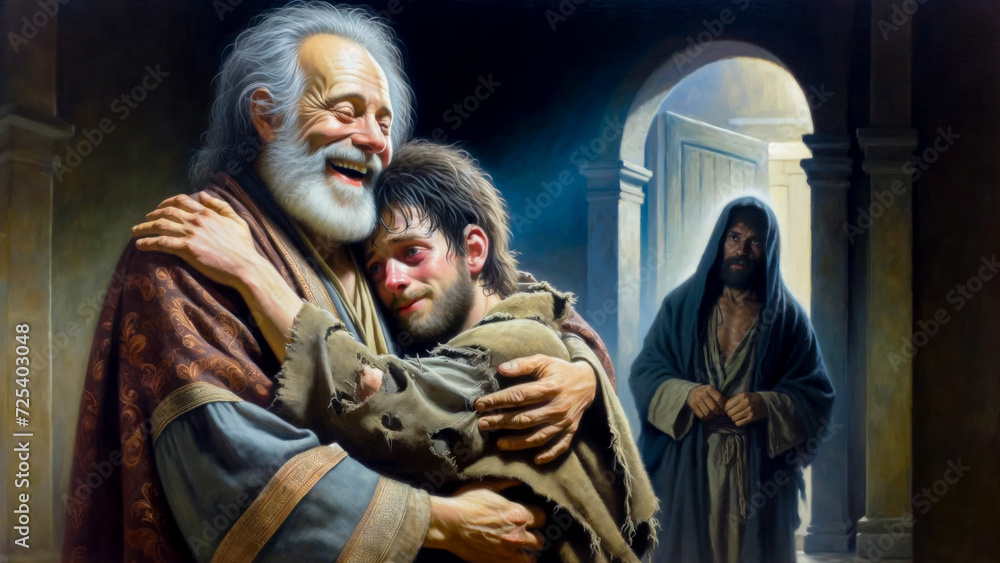
Peter’s very personhood will seem to collapse in the next few hours, and Jesus knows he will need a place to call home—just like the prodigal son in the story Jesus has already told. Here’s a truth larger than our uncertain attempts to be worthy of our Saviour. Just ask Peter!

The story of the Father’s home continues.

Jesus has not just been lifted up on a cross. He’s been lifted up in resurrection. And now, he’s lifted up to sit beside his Father in heaven[xv]—with all authority to finish what he began.

Jesus says we should be glad he’s going to the Father. It’s not just better for him. It’s better for us![xvi] And it’s better for persuading the unbelieving world of his victory.[xvii]

And, as we’ve seen, Jesus wants us to be with him where he is.[xviii] We must not cling to an earthly Jesus—as Mary Magdalene sought to do, but rejoice in his going to the Father.[xix]

We can’t afford to be content with the glory, or the intimacy, or the home we have in this world. The Father has sent his Son so that we may be filled full, as was his Son, with the glory of the Father. We’ll see more of this in the way the apostles follow up this revelation in a final article.


[i] John 17:26

[ii] John 12:27-30

[iii] John 1:17

[iv] John 17:1-26

[v] John 3:16

[vi] John 12:49-50; also 10:17-18; 12:27-28

[vii] John 17:22

[viii] John 14:15-23

[ix] John 15:4-16

[x] John 17:23

[xi] Throughout this prayer, Jesus has been very concerned with the world. He’s mentioned it 13 times in 26 verses.

[xii] John 17:23

[xiii] John 13:1, 3; 14:2-6; 14:28; 16:17, 28; 17:24; 20:17

[xiv] John 13:36—14:6. Note that this passage is all one narrative.

[xv] John 13:1, 3; 16:28; 17:5

[xvi] John 14:28

[xvii] John 16:10, 17

[xviii] John 17:24

[xix] John 20:17


[i] John 17:26

[ii] John 12:27-30

[iii] John 1:17

[iv] John 17:1-26

[v] John 3:16

[vi] John 12:49-50; also 10:17-18; 12:27-28

[vii] John 17:22

[viii] John 14:15-23

[ix] John 15:4-16

[x] John 17:23

[xi] Throughout this prayer, Jesus has been very concerned with the world. He’s mentioned it 13 times in 26 verses.

[xii] John 13:1, 3; 14:2-6; 14:28; 16:17, 28; 17:24; 20:17

[xiii] John 13:36—14:6. Note that this passage is all one narrative.

[xiv] John 13:1, 3; 16:28; 17:5

[xv] John 14:28

[xvi] John 16:10, 17

[xvii] John 17:24

[xviii] John 20:17

[xvii] John 17:24

[xviii] John 20:17

Come to the Father !

How should we approach our Creator? Clearly, this is the most important question we could ask. Jesus says we must come to God as our Father. And, of course, Jesus is showing that he is the way to the Father.

We’ve seen how important this is to Jesus. He lays down his life to sanctify us—so we can legitimately come to the Father as his children.[i]

And now, the apostles teach us who trust in Christ, how we should live before our Father. They commonly address us fellow Christians as ‘brothers and sisters.’[ii]  We belong to the Father, and so, to one another.

The apostles have been disciples of Jesus. They’ve learned from him. But this identity as disciples seems to get caught up in the new status given to believers—as children.[iii] We still learn from Christ—eagerly—but do so as those who are in him[iv], and so, in the family of the Father. This is where God wants us to spend our present life, and future.

James Packer, in his widely read book ‘Knowing God’ writes,

’If you want to judge how well a person understands Christianity, find out how much he makes of the thought of being God’s child, and having God as his Father. If this is not the thought that prompts and controls his worship and prayers and his whole outlook on life, it means that he does not understand Christianity very well at all. … “Father” is the Christian name for God.[v]

Here are several wonderful truths about the Father that the apostles make clear in their letters. I hope it’s not too simplistic to choose several words starting with the same letter, but it may help us remember who God our Father is.

The Father is the fountainhead and finale of our life in Christ. He’s the focus for our prayer and worship. And he’s the framework of the new creation to which we now belong.

First, our Father God is the fountainhead and finale of our life.

Paul warns the Corinthians, and all of us, about the subtle influence idols can have.  Many things in this world are attractive, and seem easier to get than a relationship with God. Because of this, we need, not just to know about God but to know him—that is, to have a relationship with him.

So, Paul says, for us, there is one God—the Father. Everything comes from him, and is for him. And everything he does happens through Jesus Christ.[vi]  

The Father and our Lord Jesus are one God. But there are different ways in which they are God to us. The Father is the fountainhead of all things—in creating the world and in saving us. And the Son is the one by whom the Father’s purpose and grace comes to us.

Jesus never wants to be ‘all of God’ to us. He comes from the Father, and her takes us to his Father.

This pattern of from the Father and through Christ is repeated in the way the apostles begin their letters to churches.

Paul asks that grace and peace, or mercy or comfort, will come to his fellow believers from the Father—and through Jesus Christ.[vii]

Peter says we are chosen for salvation, by the Father, to be sprinkled with Christ’s blood. By the Father’s mercy, we are born again with a living hope through Christ’s resurrection.[viii]

And John says the Father’s eternal life is revealed to us through Christ’s coming.[ix]

Without the blessings that come to us through Christ, we would not want to know God as Father, let alone be reconciled to him. We would see him as austere and unreachable. But Jesus washes us clean, dignifies us with his righteousness and floods us with his love. Through him, we want to know the Father who sent him to be our Saviour.

Paul is awed by all this, and worships. ‘I bow my knees before the Father.’ He wants the riches of the Father’s glory to strengthen us—by the Spirit and by Christ dwelling in our hearts.[x]

There’s something more Paul tells the Corinthians, and us. He says everything is for the Father.

Jesus models what this means for us. He’s lived his life on earth for the Father.[xi] But at the end of history, he will present the kingdom—all he has labored for—to his Father. He wants us to see the Father being everything to everyone.[xii]

This is the great objective of Christ—to have us before his Father, sharing in the relationship he enjoys and bringing glory to the Father.[xiii]

This is a truth we need deeply. We are created for relating, for serving, and to be appreciated. If we don’t come to know the Father and live for him, we are in danger of other things in this world becoming ‘father’ to us. We start to drift. We’re coming from no-where and going no-where. We prostitute our personhood on people and things that cannot be god to us. We become warped and deeply unsatisfied.

Jesus has died and risen to restore this relationship and to make us whole. If we now live our life in Jesus our Lord, from the Father and for the Father, our whole life is brought into balance. Other relationships take their place around this but don’t have to bear the weight of ultimate significance.

It’s an enormous relief to know that, through Jesus, we have come home to the Father.

Second, the Father is the focus of our attention.

For us, calling God ‘Father’ is not just remembering the right name. It’s a cry of recognition. In the same way that a young child’s first words may be ‘mummy’ or ‘daddy’, we cry ‘Abba, Father’. Like an infant, we are recognising the God who has given us new life, and whose provisions and words are our sole means of staying alive. The Father has our full attention![xiv]

Paul talks about this cry of recognition in two of his letters.[xv]

The Holy Spirit has come to us, and he cries out within us, ‘Abba Father’. We are speaking to God in the way Jesus did.[xvi] The Spirit is witnessing to our spirits that we are children of God.

The Holy Spirit is God—together with the Father and Son. He’s enabled Jesus to live among us and fulfill his ministry. He’s enabled Jesus to pray to the Father. Now he’s come to us to enable us to call on God as our Father. His special ministry is fellowship.[xvii] We are being included in the divine companionship!

This is not something to try and make happen. It’s a gift. And entirely necessary.

For example, the Galatians are in danger of relating to God legally—not truly. While they were still worshipping idols, they’d been slaves to their passions and to the demands of the world. And now they’re in danger of reducing their new life in Christ to a list of demands.

They’re thinking of God as an owner of slaves, not a Father of children. If they don’t know God as their Father, their behaviour will become wooden and false.

The world, and our own human nature, makes slaves of us—as we try to satisfy cravings on the one hand and demands on the other. We’re never really doing what we want to do, even while we’re claiming to be free.

But the cry of ‘Father’, coming from our hearts, and coming from above, is persuasive evidence to us that God is not harsh or demanding. We’re legitimate and permanent members of his family. Our names are known, our needs are important. We have a place in his enterprise and an inheritance to come.

We’ve not just been justified. We’ve come home!

Then, in his letter to the Romans, Paul says we must stand nobly and say ‘No’ to our fallen nature. And to do this, we need to know we are God’s children. We’re not slaves of our broken humanity. The Holy Spirit, poured into our hearts, is conveying to us all the love of the Father and all the victory of his Son.[xviii] And we need this certainty to keep us confident of receiving our family inheritance.

Again, in his Ephesian letter, Paul surveys the broad sweep of God bringing people of all nations to himself.[xix] He calls this God’s wisdom, realized through the unsearchable riches of Christ. And, for this reason, he bows his knees to the Father.[xx] He is the fountain-head of all that we need for life and godliness.

So, he asks the Father to further reveal this wonderful Christ to his church—so they will be filled with all the fulness of God! He, the Father, before whom Paul kneels, has more to share with us than we could ask or think of!

Our life as God’s children is like that of the prodigal son in Jesus’ story. We’ve been received home. We have a place of honour, and a future. Perhaps we could imagine this son, home again, on the day after the party his father arranges. He’d be up early, looking around for things to do! Does this describe our relationship to the Father? I hope it does!

I’ll take up a third aspect of how the apostles understand God being Father to us in another article. He gives to us the framework for our families, and churches, and for the future of our world.


[i] Heb. 2:11 with John 17:21

[ii] The apostles speak of believers most frequently as ‘in Christ’, or similar phrase. The second most frequent is ‘brothers and sisters’. The third most frequent is ‘saints’.

[iii] A disciple is an undistracted learner. That’s what the apostles were. It’s the way converts are spoken of in the missional book of Acts. But in the letters that speak to the inner life of the church, not at all.

[iv] Eph. 4:22.

[v] In ‘Knowing God’, p. 224. The whole chapter on adoption as God’s children is wonderful to read.

[vi] 1 Cor 8:6. This verse is an adaption of Israel ‘Shema’ or confession of faith, suggesting that God is now our covenant Father.

[vii] Paul’s opening greetings; and Eph. 5:20; Phil. 4:20; Col. 1:12

[viii] 1 Pet. 1:1-3

[ix] 1 John 1:1-3

[x] Eph. 3:14-16

[xi] John 17:4

[xii] 1 Cor. 15:27-28

[xiii] Rom. 15:6; Eph. 5:20; Phil. 4:20; Col. 1:12; 3:17; 1 Thes. 3:13; 2 Thes. 2:16; Rev. 1:6

[xiv] Because Christ is our Saviour, and our life, we do well to have him as the focus or our lives too. But it’s important to know God in all the ways he’s revealed himself to us. We need to let our affections widen, and receive all the ways God is being God to us.

[xv] Gal. 4:4-9; Rom. 8:12-17

[xvi] Mark 14:35-36

[xvii] 2 Cor. 13:14

[xviii] Rom. 8:9; the Spirit is the Spirit of God and of the Son.

[xix] Eph. 3:8-11

[xx] Eph. 3:14-21


The world has a Father

Welcome to the last of six articles about God—our Father.

In previous articles, we’ve seen that the life of Jesus is all about what the Father wants him to do, and how much we need to know his Father as our Father.

And then, we saw that the apostles describe God—the Father, being the start and finish of all things—their fountainhead and finale. Wonderfully, Paul also shows us how our attention comes to be focused on the Father. The Holy Spirit evokes the cry of ‘Father’ within us. We know where we have come from and where we are going.

And now, the apostles, Paul in particular, show us that the Father, by actually being Father to us, creates the framework for our families, and churches, and for the future of our world.

Some years back, I read the story of a young fellow in trouble with the police. All the controls and therapies available to him were proving fruitless. But his own analysis of what he needed was simple. I’ve forgotten his exact words, but his meaning was, ‘All I want is a family to belong to.’

The life God has given us in this world is not about having a career, wealth, excitement or popularity. It’s about sharing our lives with others—giving ourselves to them, and being served by them.[i] Family life is given to us to practice living in this way.

But it takes more than a happy home to create this new community and a new world. It takes everything the Father does through his Son, and everything the Father continues to do through his Son and Spirit.

As we have seen, all this is deeply personal. But it’s not private. When God shows us that he is the Father, he is showing us how things are meant to work, and how they will work in the world to come.

This is not a system or an ideology that will be successful because we do things in a certain way. God’s family is created and functions because God actively gathers us to himself. We are adopted into his family, or made part of his household.[ii]

All this begins to happen the moment the church is born. Peter announces the gospel. Many confess that Jesus is the Christ and are forgiven. They receive the Holy Spirit. But then, look at what happens. These new believers begin behaving like a family—distributing property assets to ensure all are cared for.[iii]

Each believer needs to know that they belong to each other. Each member of the family has equal access to the Father and may approach him without fear.[iv] In the certainty of this, the need of each one becomes the concern of all.

This Jerusalem church soon encounters the reality of division. Cultural differences challenge the freedom of this movement. So, the church elects deacons to make sure everyone is treated as equal members of the one family.[v]

This issue continues to surface and Paul must show that the one-ness we have as children of God is greater than all our cultural differences.[vi] The Father’s care for each of his children teaches us to love and care for those our Father cares for—perhaps, not immediately, or easily, but surely.

Without God as Father and without the church as the community he is building, the world imagines they can find a meaning within themselves and in pursuing personal goals. But God has set his church in the midst of this world to be a working case-history of community. His community.

In his letter to the Ephesians, Paul celebrates what a great thing God has done in choosing us, drawing us to himself, to be holy and blameless before him. He is gathering a family from all nations. Paul marvels at this. And he worships the Father.[vii]

Then, he shows how the church grows. There is one Spirit—we are sharing one life. There is one Lord Jesus—we are dependent on one Saviour. And there is ‘…one God and Father of all, who is over all and through all and in all.’[viii]

But notice how God goes about being Father. Out of the riches of who he is, he purposes to make us inwardly strong.[ix]

What does that look like? Well, God knows that, by nature, we are anxious for ourselves, protective, jealous and selfish. This is what guilt does to us. But, in his family, everything works by love.

When differences occur, as they do, we need to live in the truth of a Father who receives each of us and whose kindness and will must prevail. We need to know the love of Christ. We need to be filled with God’s fullness. And we will find that God our Father can do more that we imagine.

This love of the Father through our Lord Jesus is not so much something to be understood as to be received. If we live with one another in this way, our usual point scoring can be dropped and our egos can be shaped by the Spirit’s fruits. We will have become strong. We have become imitators of God, as beloved children.[x] This is what we are created for. And this will be the future of our world—shaped by other-person-preferring love—our affections all reflecting the broadness of our Father’s mercy.


[i] If eternal life is knowing God as our Father and knowing and Jesus as the Son (John 1:1-5; Col. 1:13-17), it follows that temporal life is all about knowing other people—really knowing them so as to see who they are and what they need.

[ii] Eph. 1:5; 2:19-22

[iii] Acts 2:38-47; 4:32-37

[iv] Eph. 2:18; 3:12

[v] Acts 6:1-7

[vi] Eph. 2:18-19

[vii] Eph. 3:8-14

[viii] Eph. 4:4-6

[ix] Eph. 3:14-21

[x] Eph. 5:1


[i] If eternal life is knowing God as our Father and knowing and Jesus as the Son (John 1:1-5; Col. 1:13-17) , if follows that temporal life is all about knowing other people—really knowing them so as to see who they are and what they need.

[ii] Eph. 1:5; 2:19-22

[iii] Acts 2:38-47; 4:32-37

[iv] Eph. 2:18; 3:12

[v] Acts 6:1-7

[vi] Eph. 2:18-19

[vii] Eph. 3:8-14

[viii] Eph. 4:4-6

[ix] Eph. 3:14-21

[x] Eph. 5:1

Confronting failure

What is the solution to our all too frequent failures to live as people who belong to God? We’ve not wanted to fail, but we have. It may have been envy, or pride, or an angry outburst. It may have been the lack of the virtues that reflect the Jesus we know. All of us have weaknesses—sins that seems to cling to us (Heb. 12:1).

The pain of failure is very real. More importantly, the loss to God’s glory is very real.

It’s important to get the answer right here. We seem to be on uncertain ground. Sin is not just an accident, something we can correct with a bit more effort. Satan has sought to move us onto his ground. Following our own heart has become more important to us than what God wants.

And then, the law that’s been written on our hearts tells us that we’re out of order. It can make us wonder who we really are, and to whom we belong. It may make us question if we have a right to ask for forgiveness yet again.

The verse from Hebrews that I referred to above, about sin clinging to us, is followed by this statement, ‘…let us run the race that is set before us, looking to Jesus…’. Here’s where we need to start.

Part of Satan’s strategy is to get us focused on ourselves. That way leads down, not up. We need to be looking to Jesus who is not just the author of our faith, but also its perfecter. He’s died for us. And he’s now seated beside God, directing everything—including us when we’ve failed.

This is exactly what’s happening during the time when Peter denies the Lord. Jesus explains the situation to him before it happens: ‘Satan demanded to have you that he might sift you like wheat, but I have prayed for you that your faith may not fail. And when you have turned, strengthen your brothers’ (Luke 22:31-34). Jesus couldn’t have made a clearer claim to be managing everything during this period of Peter failing.

And then, at the very time Peter fails, Jesus looks at him. We can be sure that he is looking at us too, when we fail—looking with understanding. And we need to look to him—not run in another direction.

Paul confronts this issue in Romans 7 and 8. He writes a section about not doing the good he wants, and doing what he doesn’t want to do (7:14-25). And he writes it in in the present tense—suggesting that he writes from personal experience. He knows that his failures are breaking God’s law. And they make him confused (v. 15), confined (v. 23) and wretched (v. 24).

This is what he feels. But notice, it’s not who he is.

Daringly, Paul says his sinning isn’t him! It sounds like the excuse a child might make when caught doing something wrong. But God has given him—and us—a new identity. Who we are is not changed when we do something wrong.

We’re God’s children. We’re not related to him because we please him. Everyone who trusts in God’s Son is given the right to be called a child of God. And this Son of God has taken into account our whole life of sinfulness. He’s accounted for everything we did years ago, everything we’re concerned about now, and everything we will do wrong in the future.

All of this—past, present and future sin, has already been condemned. Jesus was condemned in our place. That’s why the condemnation we feel now is not coming from above. God’s finished with the condemnation for all who trust his Son.

The condemnation we feel is coming because we’re still wanting to behave well without being dependent on Christ. And Satan takes advantage of that and plays his nasty games with us.

What we need when we sin, more than anything else, is humility. Failure can drive us to an anger-based severity. Our pride has been dented and we want to recover.

If we do this, we’re virtually saying that we don’t need a Saviour. We may have been grateful to him for getting us going, but not aware of how we are going to need this Saviour all our lives.

So, when we find we’ve failed to do what God wants, we need to preach the gospel to ourselves. Our sins are washed away. We’re not being condemned—not by God.

And then, the Holy Spirit is leading us on to a better way.

Paul describes this new life as ‘the law of the Spirit of life in Christ Jesus’. The Holy Spirit is taking the things of Christ and showing them to us. He’s showing us our sins being washed away. He ignites love in us—love for Christ, for people around us. And he shows us how to live.

This is the power that sets us free from ‘the law of sin and death’. We are freed from law being in charge. And freed from its threatening. We belong to Christ and are ready to live fruitfully for God (Rom. 7:4). This is our new identity.

We need to make up our mind to follow what the Spirit is showing us.

His joy in bringing to us what Christ has done is infectious. It won’t seem so hard to do what God wants, or to steer away from temptations. He teaches us to call God our Father. This new life doesn’t have a legal basis but a familial one.

So, which ‘law’ or principle are we walking by? Are we dragging ourselves from one failure to another, or descending upon our life with the freedom of ‘the Spirit of life in Christ Jesus’?

The failures that grieve us may be the failures we need to have. Everything we pass through in life is designed to throw us back on the Saviour to whom we owe our life. And our unwanted sins awaken us to the reality that we need the Holy Spirit’s constant renewing of us.

While our eyes are on Christ and we are relying on the Holy Spirit, we will know who we really are. And we will grow in producing all the qualities that God looks for in us. Love, joy and peace will return. Patience, kindness and goodness will grow. People will see faithfulness, gentleness and self-control. And Christ himself will see the fruit of what he’s done for us. And he’ll be satisfied (Isa. 53:11). What we think of ourselves doesn’t matter a hoot. It’s his pleasure that matters.

Jesus as Leader and Saviour

What do we have in mind when we confess that Jesus Christ is Lord[i]. What do we mean by saying he is the Christ, and that he is our Saviour? These are the claims Peter makes for Christ when the church is born.

These claims are basic to our faith. They are also basic to God because it’s his way of fulfilling his plan for our world. They tell us that Jesus alone can secure our life and future.

But in a world that scorns any authority but its own, what do these statements mean to us personally? You probably feel as I do, that the distain of the world for anything unseen can seep into our own souls and dim the joy that is appropriate to us having such a great Lord.

The answer of course, is to let the word of our Lord Jesus Christ have full play in our minds and affections—and in our Christian communities.[ii] And I’m trusting that some simple articles about the authority of Jesus will be some help along the way.

The early chapters of Acts spell out the church’s early experience of Christ as the risen Lord and we can learn much from them.

God has demonstrated that Jesus is Lord, and Christ, by raising him from the dead. These are the two points Peter makes on Pentecost day. But there is another phrase he uses a little later, he is Leader and Saviour, and I’ll begin there.

Peter uses this phrase after he and the other apostles have been arrested. He is responding to authorities who oppose their preaching. But they must obey God rather than man. God has raised Jesus from the dead and seated him in heaven as Leader and Saviour.[iii]

Peter has also used the word meaning Leader, when speaking to people in the Jerusalem temple, and after healing a lame beggar. But there it is translated as Author.[iv] Israel has killed no less than the Author of life.

Here is leadership unlike anything humans can do. We can only arrange and provide for people as they are. We can’t make them different. But Jesus is the Author of life. We were dead to God. But through Christ, we are alive to God and ready to live for him.

The disciples have been introduced to this leadership of Jesus by being with him physically. They have seen him dealing with human need. They have concluded that only he can bring them to God. And they know they can’t go to anyone else.

But now, the mighty events of Christ’s death and resurrection have happened. And the disciples have discovered the shallowness of their relationship with Jesus.

And yet, this resurrected Jesus has carried straight on. He’s picked them up from their failures and taught them to live by his grace. He’s taught them, over several weeks, about the kingdom he is going to establish and administer. And before he’s taken to heaven, he affirms that ‘All authority has been given to me in heaven and in earth’.

Jesus now exercises that authority, leading his church from heaven. He’s no longer visible but he’s still in charge. Jesus has told the disciples that it will be better for them when he goes because he will then send the Holy Spirit to them.[v] And, of course, it is better for us all that the authority of Jesus is being exercised, not from earth but from heaven—by the Holy Spirit being among us.

The apostles wait until the Spirit comes. And come he does!

The Holy Spirit, who has previously spoken only to prophets, now speaks through some 120 people, simultaneously[vi]—and in a variety of languages. Jesus has acted. He is in heaven, but all of them know he’s in charge.

They are enabled to speak about God’s mighty works.[vii] And then, Peter explains what these mighty works are.

There’s the mighty works God did through ‘this Jesus’ while he was on earth.[viii] But these did not establish his authority. We—represented by those there at the time—killed him.

But Jesus has done exactly what has been needed. He’s done what his Father wanted. He’s loved us, and laid down his life for us. This is the mightiest deed that has ever been done.

But the mighty deed that Peter must speak about is God raising Jesus from the dead. This is not just a message about the authority of Jesus. It’s the good news we’ve all needed to hear.

Jesus is not only Leader. He is Saviour.

Notice how much attention Peter gives to King David’s anticipation that death will be overcome.[ix] The great work God is about with us human beings isn’t meant to finish with a funeral!

However, apart from this Saviour, death hangs over all of us. It’s like a shroud we wear prematurely.[x] It affects our approach to everything we do. It keeps us trapped.[xi]  We try to make ’heaven on earth’ for ourselves.[xii] And it’s not just that we die that matters to us. Underneath all our protests, we know we’ll get what we deserve.[xiii] We share the same fault as Adam, and the same fate.[xiv]

This shapes our attitude to God and his purposes. We resent his final control over our destiny. We’re trapped in resentment and hostility.

But no longer. Jesus has taken our fault as his own, and suffered our fate—in our place. That’s the love he has for us.

And this man, this Saviour, is alive again—alive to his Father God. And in him, so are we! So, if we’re trusting in him, death no longer has the final say about our identity, or destiny. We know God and know we already have life that is eternal.

And then, there’s another strand to this. Think of the dead weight failure produces in us. Think of the remorse we feel for lost opportunities. Think of Peter and the other apostles. None of them has been the disciple they thought they were.

So, how glad Peter must be to announce the forgiveness of sins![xv] He is not a good man correcting other people who need to be good. He is just one sinner telling other sinners what Christ has done with our sins and with their result.

Neither death or sin has the final say about our life, or future. Forgiveness, and eternal life, now now announced to us in Jesus name.

We remember that the thief who died on a cross next to Jesus asked to be ‘remembered’ when Jesus came into his kingdom—or authority. Now, on Pentecost day, thousands are lining up to be included. ‘Lord, remember me too!’

Clearly, what we really need is not a strong man to represent our interests, or resources enough to secure our future. We have needed, and now we have, a Leader and Saviour who acts from above, who acts truly, who does what will change the future—or, as we say, make history.

We need God! And Jesus brings us to him—clean, unashamed and ready to share in his agenda. We’re not helpless, hopeless victims. We’re sons and daughters of God.

Here is a Leader and Saviour to love and to follow, to trust and to delight in!

Next time, we’ll look at Jesus as the Christ, and after that, as Lord, and finally, as Son of God.


[i] Acts 2:36; Phil. 2:11

[ii] Col. 3:16

[iii] Acts 5:27-31

[iv] Acts 3:15. Archegos can be translated as author or leader.

[v] Jesus mentions this three times—in John 14:16; 15:26; 16:7

[vi] Acts 1:15; 2:1-3

[vii] Acts 2:11

[viii] Acts 2:22

[ix] Acts 2:25-31

[x] Isa. 25:6-9

[xi] Heb. 2:14-15

[xii] Luke 12:19; 1 Cor. 15:22

[xiii] Heb. 9:27

[xiv] Gen. 2:17; 3:19

[xv] Acts 2:38-40

Jesus Christ—the King we need

What do we have in mind when we think of Jesus our Saviour—now seated beside God in heaven? We are familiar with his days spent among us on earth and these are important for us to know. But what about now?

Peter has called him our Leader and Saviour. But on Pentecost day, when many gather and hear about the wonderful works of God, Peter says that he is Israel’s long awaited Messiah, or Christ.

The words ‘Messiah’ or Christ’ simply mean someone anointed by God to act and speak for him—like priests or kings in Israel. But the words (one is Hebrew, the other is Greek) have become widely used to refer to the person God has promised to send—a great king to lead his people truly and powerfully.

Knowing that Jesus is this promised Christ is not new to the disciples. John the Baptist has pointed to it. Peter has confessed it personally. The disciples have expected him to have a kingdom in which they will share. It’s the question raised at Jesus’ trial.

But now, it’s different. Jesus has been ‘made’ Christ by God raising him from the dead and seating him at his side.[i] He is the King identified by David, to whom all nations will become subject.[ii] As Jesus has already said, all authority in heaven and earth is given to him.[iii] Or, as Paul says, he has been ‘declared to be the Son of God in power by his resurrection from the dead. Jesus Christ our Lord.’[iv]

From now on, the apostles will rarely call him Jesus without adding one or more of his titles. He holds a position that requires reverence. Before this, they have argued with him about whether he should die or not. They have asked for favours in his kingdom. But not now.

Their sins have been laid bare—painfully. The atonement for them has been offered—in the most graphic and final way possible. Victory over death, and the sins that led to this, have been plainly demonstrated. And they are forgiven.

So now, the disciples are ready to follow Jesus—humbly—into the victory he has won. And they are prepared for the battle that will follow.

The implications of this are enormous and they are life-changing.

God has poured all that he has promised to do for us and for our world into one person—his anointed King. He’s made lavish promises about what he will do through this one man.

But Jesus surprises everyone, including his own disciples, because he doesn’t do some of the things they’re expecting. No-one can guess what healing for the nations will look like until it happens.

Jesus deals with this, after his resurrection, when he talks to two disciples about what they expected a Messiah to be.[v] He explains what they should have expected ‘from all the scriptures’—not just from the triumphant ones. He says they are foolish not to have understood that it was necessary for the Christ to suffer and then enter into his glory.

God’s anointed is not only God’s King but his Servant.[vi] He’s the suffering Servant announced by Isaiah.[vii]

So, the Christ acts gently, not stridently. He gathers people to the Lord, not just makes their life convenient.[viii] He suffers, and is able to help others who suffer.[ix] And, far from punishing his enemies, he wears their sins as his own. And then he declares that those who trust him are righteous.[x]

We can see Jesus acting with this kind of authority, even as he suffers for us on his cross.

He prays that his torturers will be forgiven.[xi] He tells a thief he will share in his kingdom.[xii] He announces that what he has been given to do is complete.[xiii] Then, he lays down his own life.[xiv] The officer in charge of the execution has never seen anything like this. He says that Jesus must be the Son of God![xv] This is effectively a confession that the sign above him is correct. Jesus is the King of the Jews. He’s Israel’s Messiah.

And now that Jesus is raised to exercise unfettered power, he acts with the same spirit that he showed on his cross. He remains the humble servant of our need.

The Apostle John sees visions of Christ as Ruler and King—fearful enough to make John fall down as though dead[xvi]. But then, in another vision, this same Ruler is weak enough to look like a lamb that has just been killed. Jesus will always remain the Lamb—even while he administers the movement of nations.

This is how Jesus Christ, from his throne in heaven, uses his authority. He changes people by the most intimate of loving, and by the costliest of actions. He removes the debris that prevents us from being truly human and recreates us as living children of God.

In fact, God’s plan is to unite everything in Jesus Christ.[xvii] Without his sufferings and our submission to him, we breed disunity. Only God’s Messiah, ruling from the heavens, can create peace.

But Christ works by persuading, not forcing. The parables he has told[xviii] have shown the disciples how this will work, and they now have the opportunity to be the agents of it happening.

So, Christ in in charge of everything.[xix] He determines the rise and fall of the nations.[xx] But he also enables each of his servants to have their place in his church. He—not us—is the one who will fill everything with his fullness.[xxi]

So, the church’s authority is not political or militaristic. It’s prophetic. We speak Christ’s word, and he, not us, breaks down hostility. And he draws people to himself.[xxii]

Jesus, the risen Christ, introduces his reign by giving his peace to the disciples. Then, he makes his regime public on Pentecost day by having Peter announce forgiveness of sins to those accountable for his execution. He calls us all to repentance, and to faith in him—faith in him and in nothing else.

This is radical. We’re called to leave behind all our good works—they were a charade. And all our bad works—they are forgiven. And all our complaints—we’ve never been treated so generously. And all our selfish ambitions—we’ve been transferred into his kingdom, and there’s no horizon larger than that. And to leave behind all our fears—Christ is for us; who can be against us.[xxiii]

So, from now on, we live for Christ.[xxiv] And this is not only appropriate, it’s possible. He is living for us.[xxv] And this love of Christ constrains us to live selflessly.[xxvi] In fact, we are all destined to be transformed into the likeness of Christ.

And we will see all God’s enemies defeated.[xxvii] It is folly for world leaders to over-rule Christ’s reign. The Lord laughs! He’s appointed his Son to be in charge, and to inherit the nations. Both leaders and people should rejoice in him, and be in awe of him.[xxviii]

If all this seems unreal, we need to remember what Jesus tells Nicodemus. We cannot see the kingdom of God, or enter it, until we are born again.[xxix]  We need the gift of the Holy Spirit—to know Christ, and to be personally renewed. In this way, we are transferred into God’s kingdom[xxx] and begin to discover the powers of the age to come.[xxxi]

Confessing that Jesus is the Christ may get us into trouble with those who don’t like God being in charge of anything. But, as Paul says, compared with Christ, everything else is like something that can be thrown away. Christ has made us his own![xxxii] He’s met us in the depths of our need. And he’s continually leading us to the victory he has won.[xxxiii]


[i] Acts 2:36

[ii] Acts 2:33-35

[iii] Matt. 28:18

[iv] Rom. 1:4

[v] Luke 24:25-27

[vi] Acts 4:27-30

[vii] Isa. 42:1-4

[viii] Isa. 49:1-6

[ix] Isa. 50:4-9

[x] Isa. 52:13—53:12

[xi] Luke 23:34

[xii] Luke 23:39-43

[xiii] John 19:28-30

[xiv] John 19:30

[xv] Mark 15:39. He speaks out of his idolatry, but unwittingly expresses what is actually true.

[xvi] Rev. 1:9-20

[xvii] Eph. 1:7-10

[xviii] Matt. 13

[xix] Acts 23:11

[xx] Rev. 6:9-11

[xxi] Eph. 4:7-16

[xxii] Rom. 10:17; 2 Cor. 10:3-5

[xxiii] Rom. 8:31-39

[xxiv] Phil. 1:21

[xxv] Heb. 7:25

[xxvi] 2 Cor. 5:14

[xxvii] Psa 110:1, quoted by Peter in Acts 2:34

[xxviii] Psa. 2, quoted by Peter in Acts 4:25-26

[xxix] John 3:3-8

[xxx] Col. 1:13

[xxxi] Heb. 6:4-10

[xxxii] Phil. 3:12-14

[xxxiii] 2 Cor. 2:14-17